One of the growth sectors, it seems, in Northern Ireland, at least since the so-called ‘ceasefires’ of the 1990’s has been ‘Troubles Tourism,’ where visitors to the city are given guided tours of relics of the troubled past pf the region. You can book a ‘Troubles Taxi Tour’ from around £75. Hotels, travel and holiday companies and cruise ships are including Troubles Tourism in their itinerary offerings. Visitors take open-top buses, coaches, bicycles and walking tours, looking at the locations of riots, bombings and shooting, photographing political murals and of course visiting the infamous Belfast ‘PEACE LINES’

On Monday, 4th August 2025, I happened to be driving along Northumberland Street, a thoroughfare between the unionist Shankill Road and the nationalist Falls Road, when I was held back by a large luxury coach, with a Republic of Ireland registration, disgorging a batch of (obviously foreign) passengers who were excitedly gathering around the gates of the peace wall, cameras and phones at the ready. I hadn’t time to stop, so I resolved to return the following day, and see if any other tourists were about. I did, along with my Fujifilm X-T50 camera, and sure enough – there was not one, but two busloads of foreign visitors.
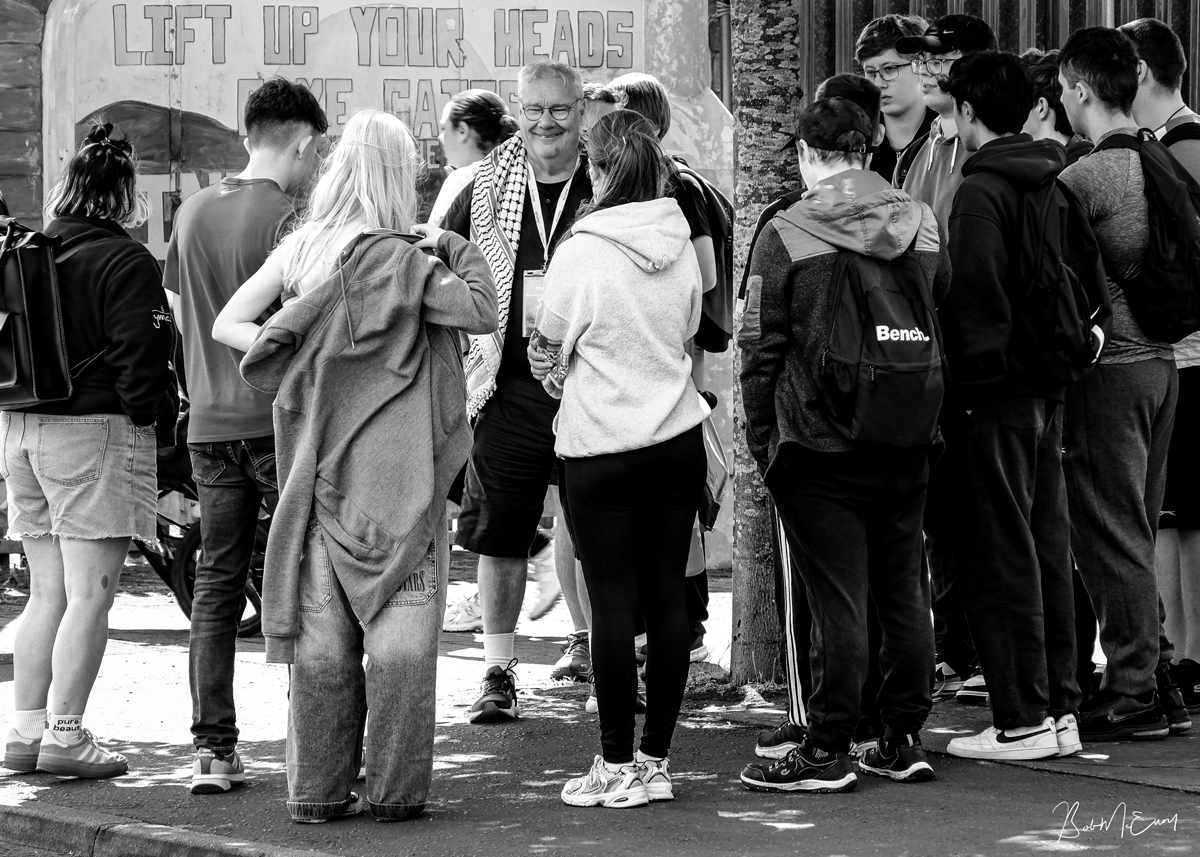
Many of the ‘Peace Lines’ (There are probably more than 50 stretches of these walls and gates) have been around since the earliest days of the troubles, when the underlying unrest swelled into violence in 1969. They were at first intended to be temporary structures, and attempts have been made by various cross community groups to have them removed, but ironically it seems that since the Belfast/Good Friday Agreement in 1998, the walls have been strengthened and extended in height and length, perhaps in its own right a political commentary on the superficiality of the ‘peace’ and how it is maintained. Certainly the murals painted on the walls on each side of the Peace Line here at Northumberland Street, and further into the streets and roads surrounding it, mark out the political allegiances of the communities who live there.


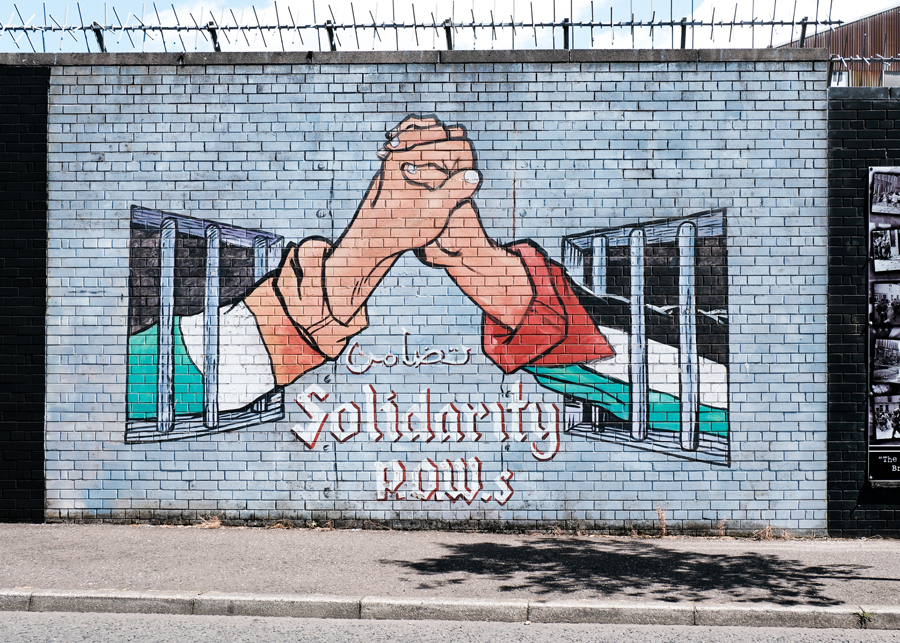
The murals not only depict the local conflicts between the two communities that lie on each side of the wall, but wider political alliances too. Murals on the unionist side of the Peace Line display allegiance to Israel, while the nationalist murals show an affiliation with Palestine.
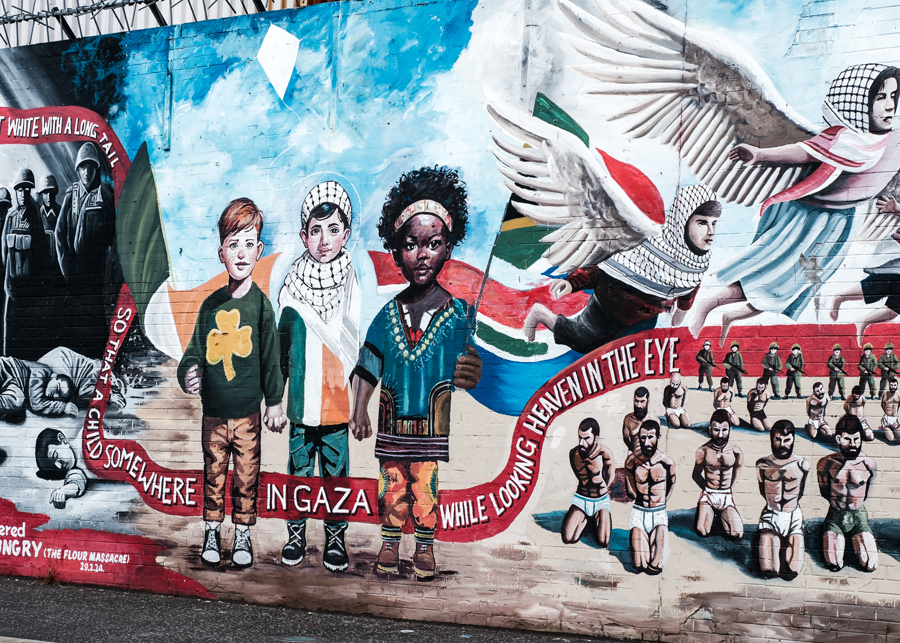
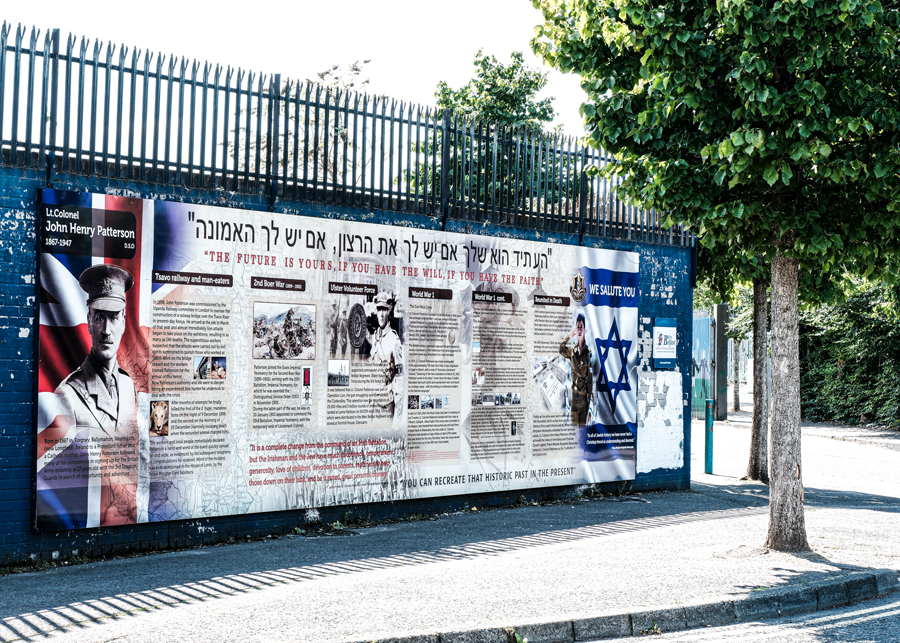
There have, as I’ve said, been attempts at reconciling the two communities, and much good work is done by church and voluntary groups. At Northumberland Street, a church building straddles the Peace Line. proclaiming that they are ‘Being a Good Influence,’ and a large Cross has been erected, (These two communities, Protestant and Catholic both profess Christianity) in 2014, to mark 45 years of conflict and praying that it would be the last year.

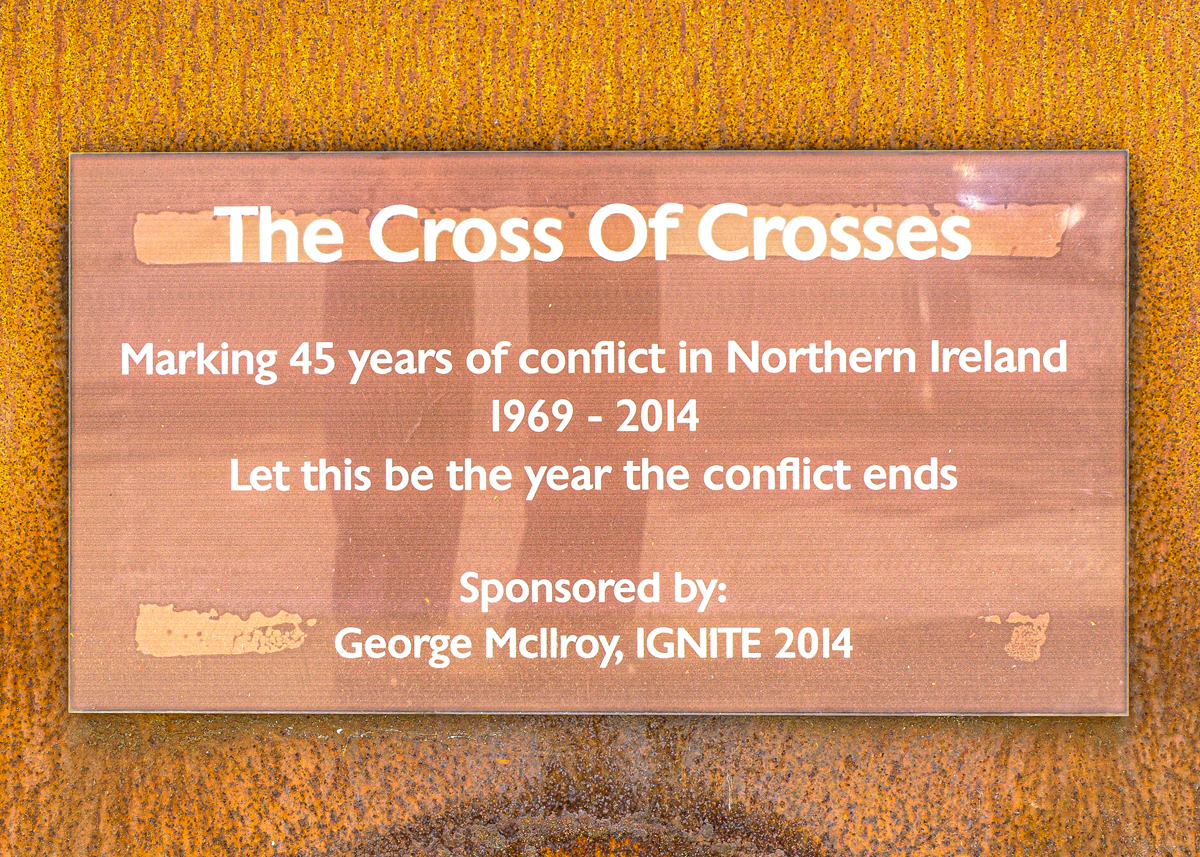
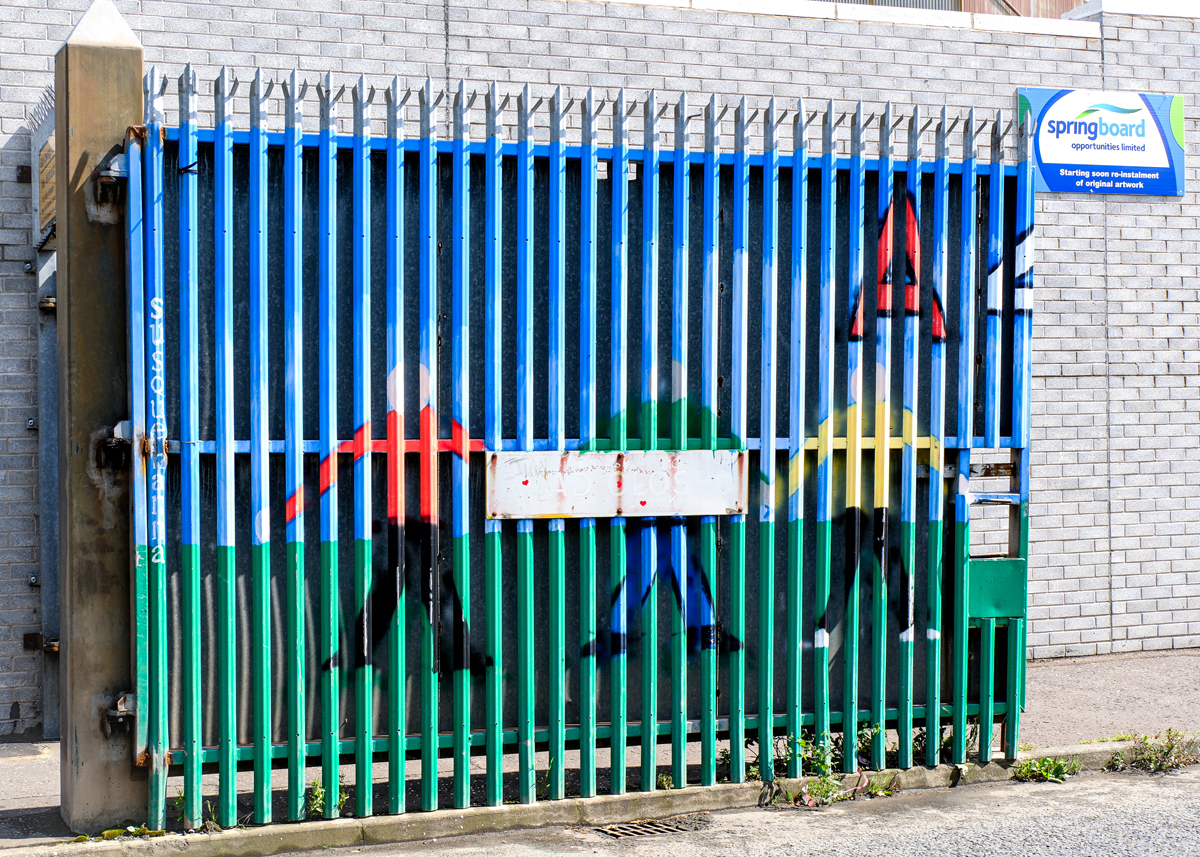
In September 2019, a conference was held in Belfast to mark the anniversary of 50 years of the Peace Lines in the city, and that conference included discussions on the past and possible future of the peace lines. One wonders if one of the decisions about the future of the walls discussed was their attraction for visitors, and their contribution to local tourism!
 Portraits2Go.co.uk