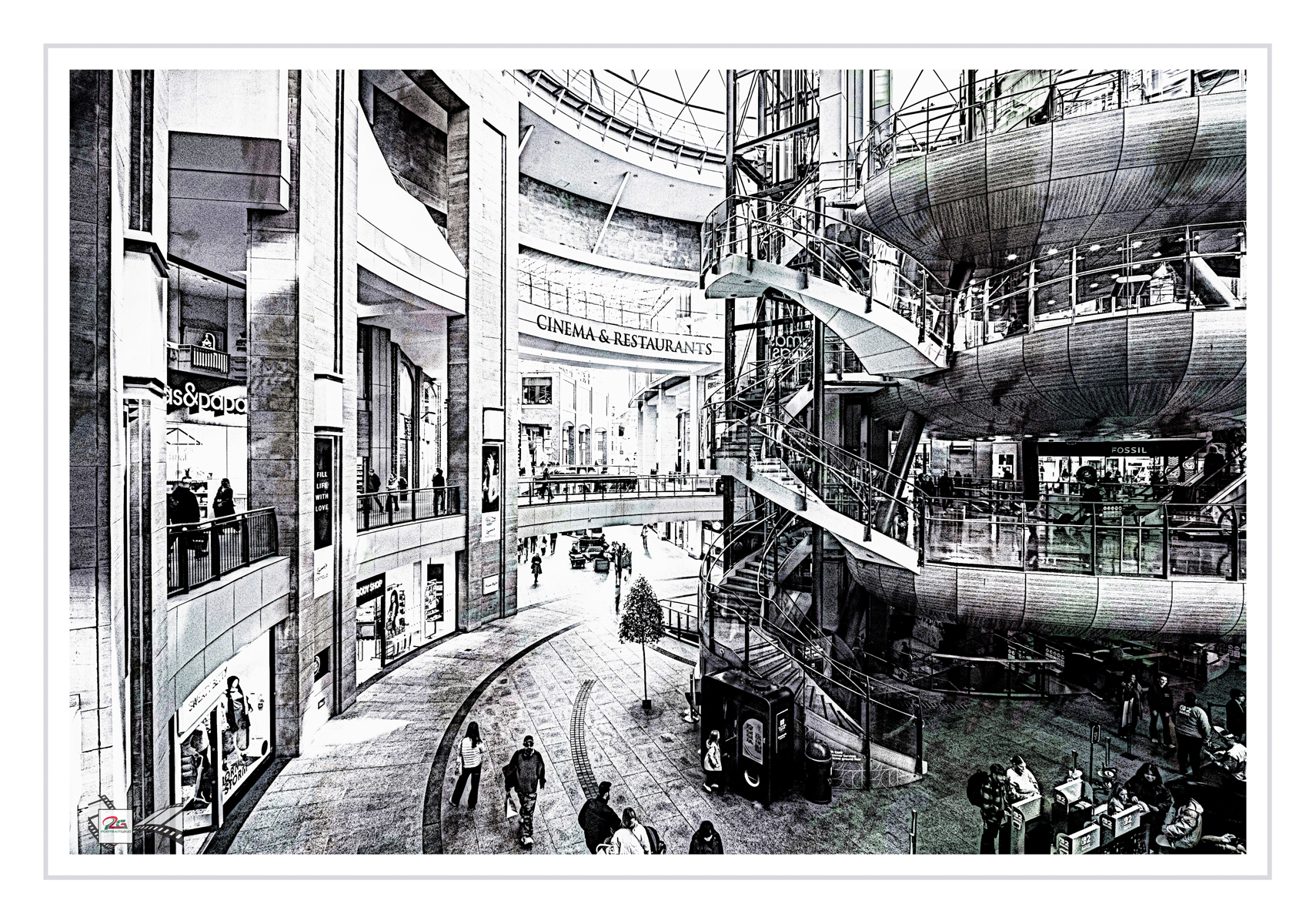
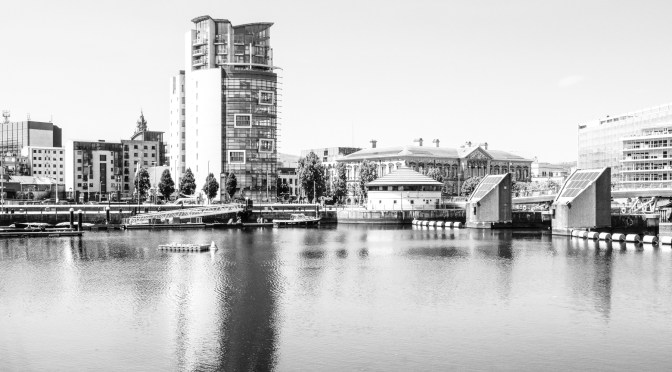
Victoria Square in Belfast opened on 6 March 2008 as Northern Ireland’s largest and one of its most expensive property developments, a £400 million, 800,000-square-foot commercial, residential and leisure complex that took around six years to complete.
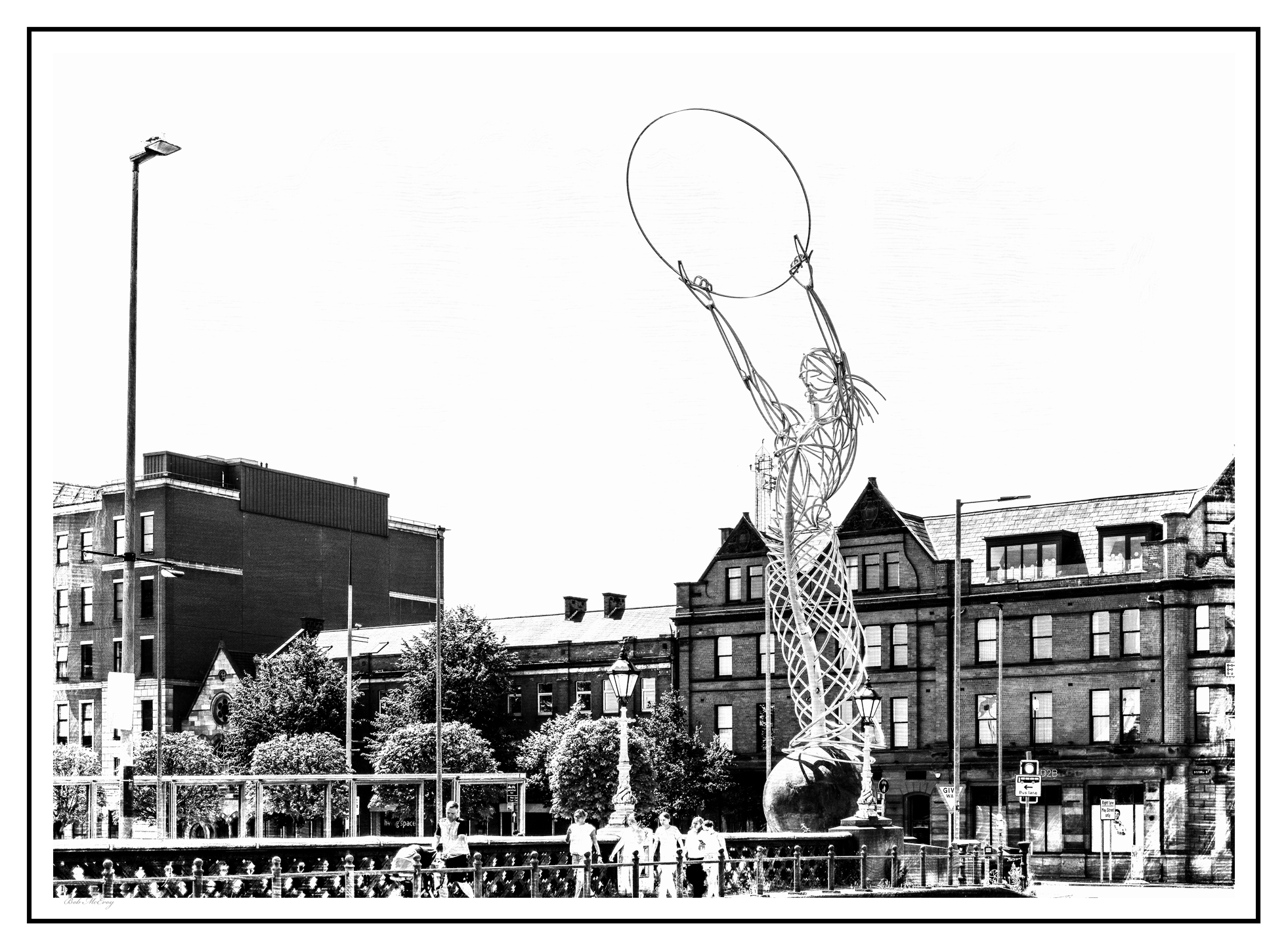
Photographed by me (a real human) using a Fujifilm X-T50 camera, and given a sketch effect in post capture processing.
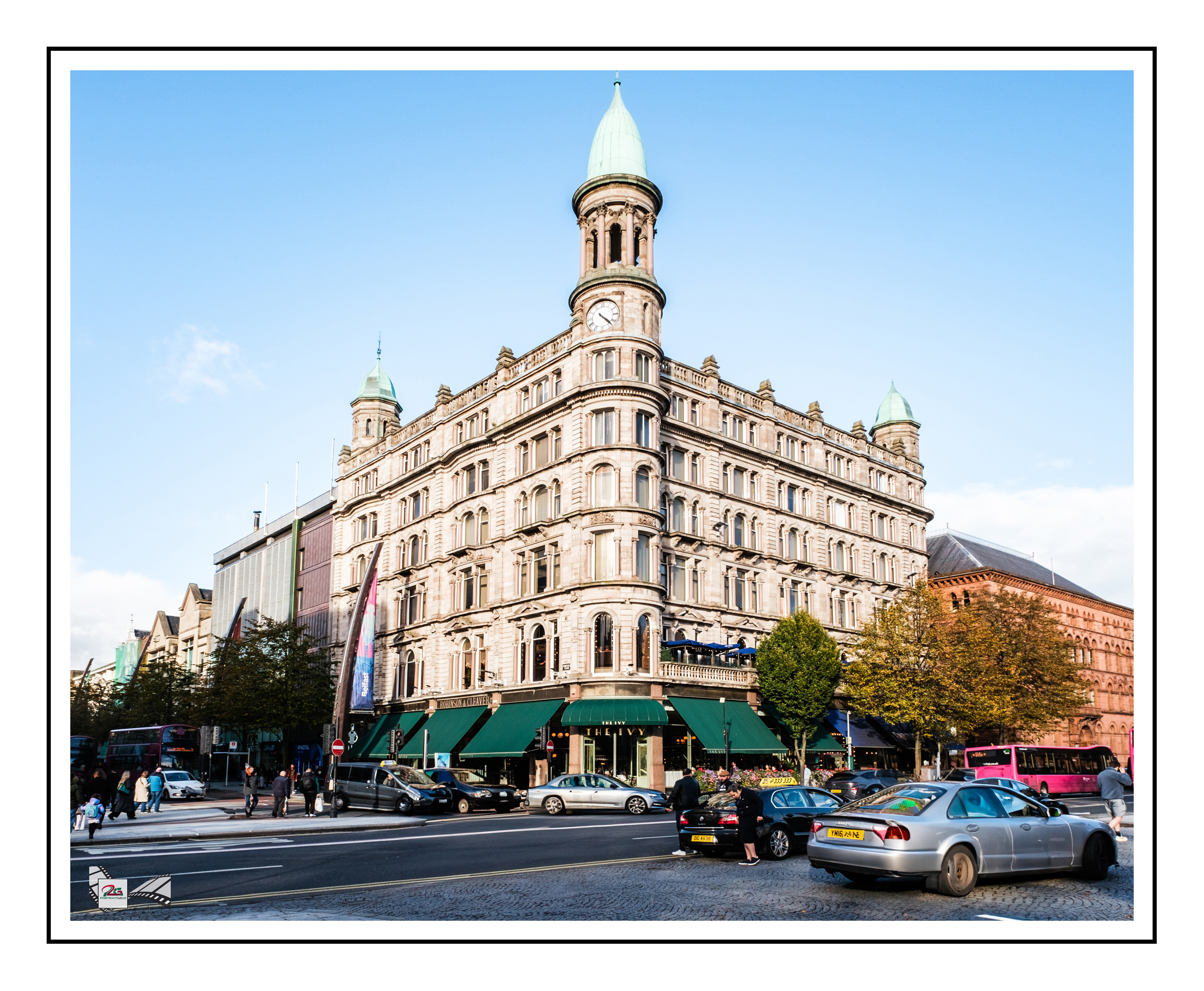
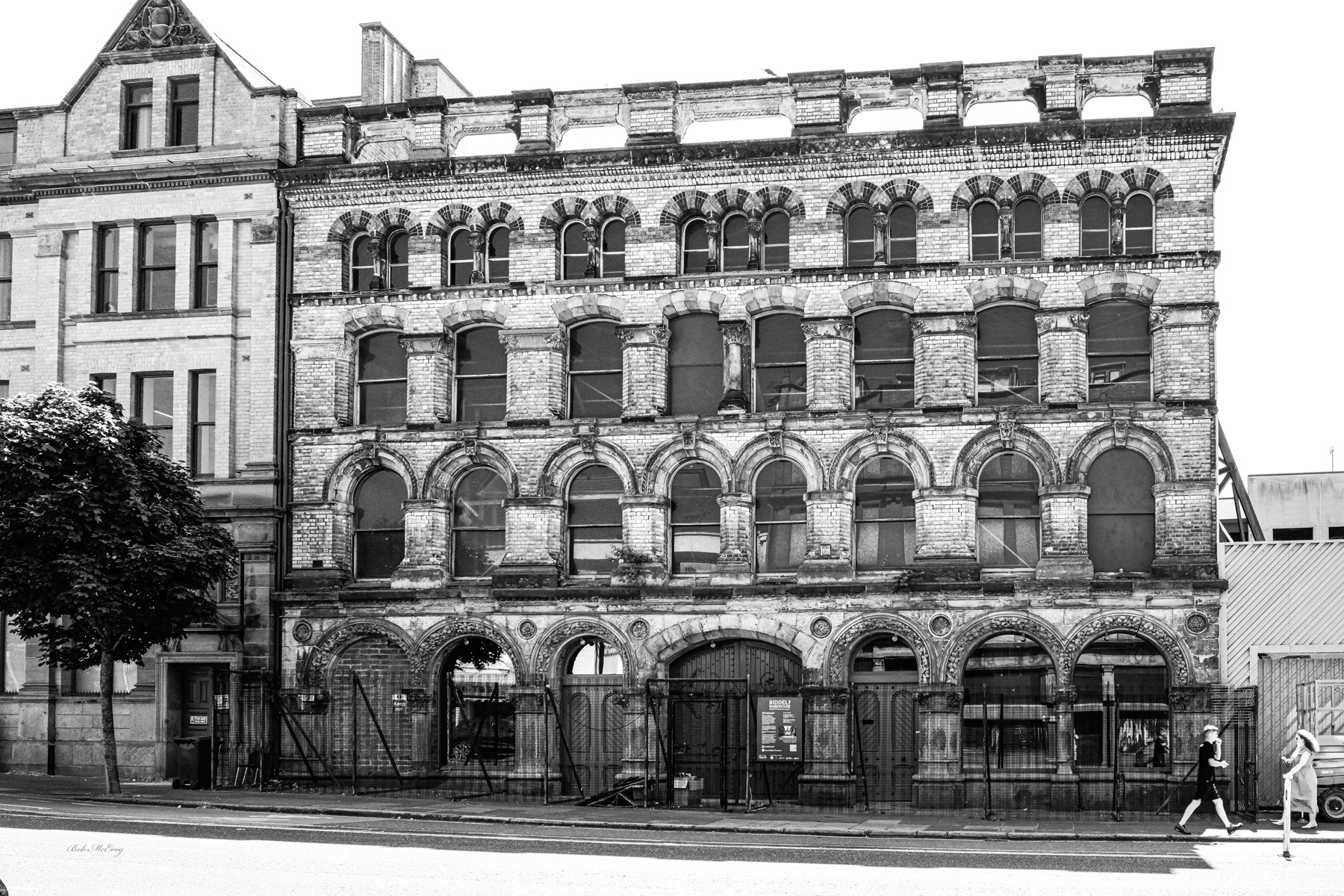
The old Robinson and Cleaver building in Belfast, standing on the prominent corner of Donegall Place and Donegall Square North, was constructed between 1886 and 1888 as the Royal Irish Linen Warehouse for the successful department store founded by Edward Robinson and John Cleaver.
Tudor Revival Architecture, with a story of Ambition, Survival, and Superb Craftsmanship.
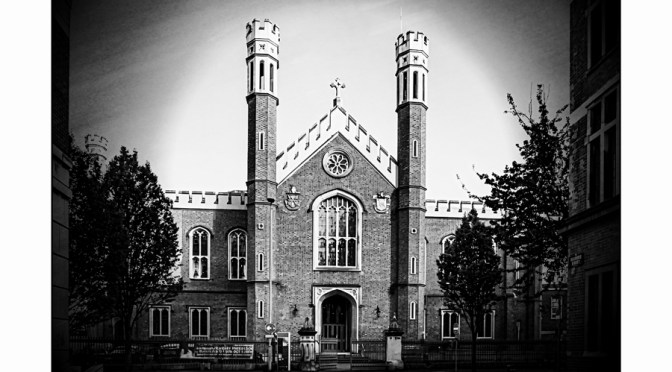
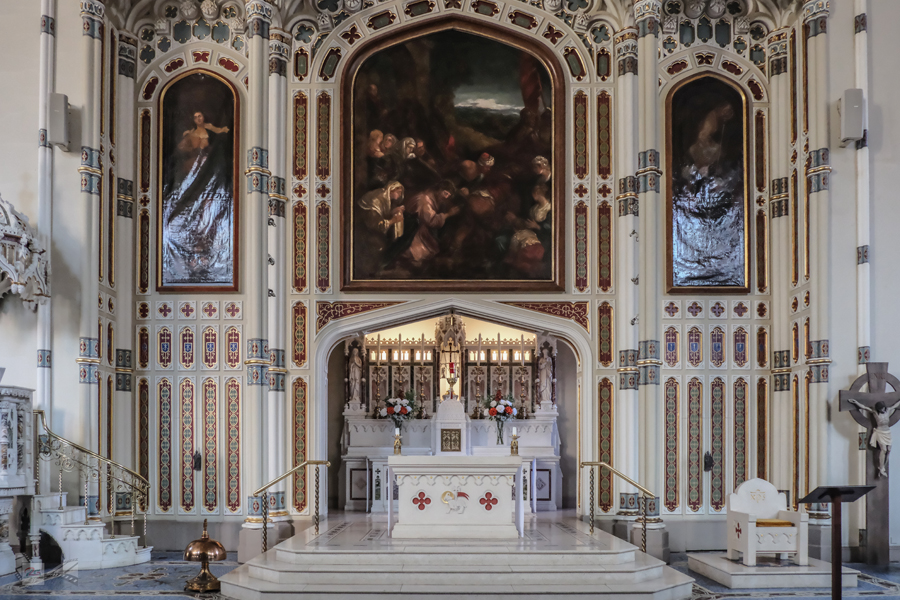
Tucked just a short walk from Belfast City Hall on Alfred Street stands one of the city’s most distinctive buildings: St Malachy’s Roman Catholic Church. From the outside it looks almost like a miniature Tudor castle, all red brick, castellated parapets and octagonal turrets. Step inside, however, and the contrast is dramatic. The interior opens into an ornate, intimate space crowned by a fan-vaulted ceiling that many visitors compare to a wedding cake turned inside out. Completed in 1844, the church is the third-oldest continuously used Catholic church in Belfast (after St Mary’s and St Patrick’s) and one of the finest examples of Tudor Revival architecture in Ireland.
A day spent around Belfast city centre can be quite boring for the dutiful husband who is required to take his ever patient wife to the city for a shopping trip – especially when that shopping trip involves what seems like endless browsing around the many clothing outlets!
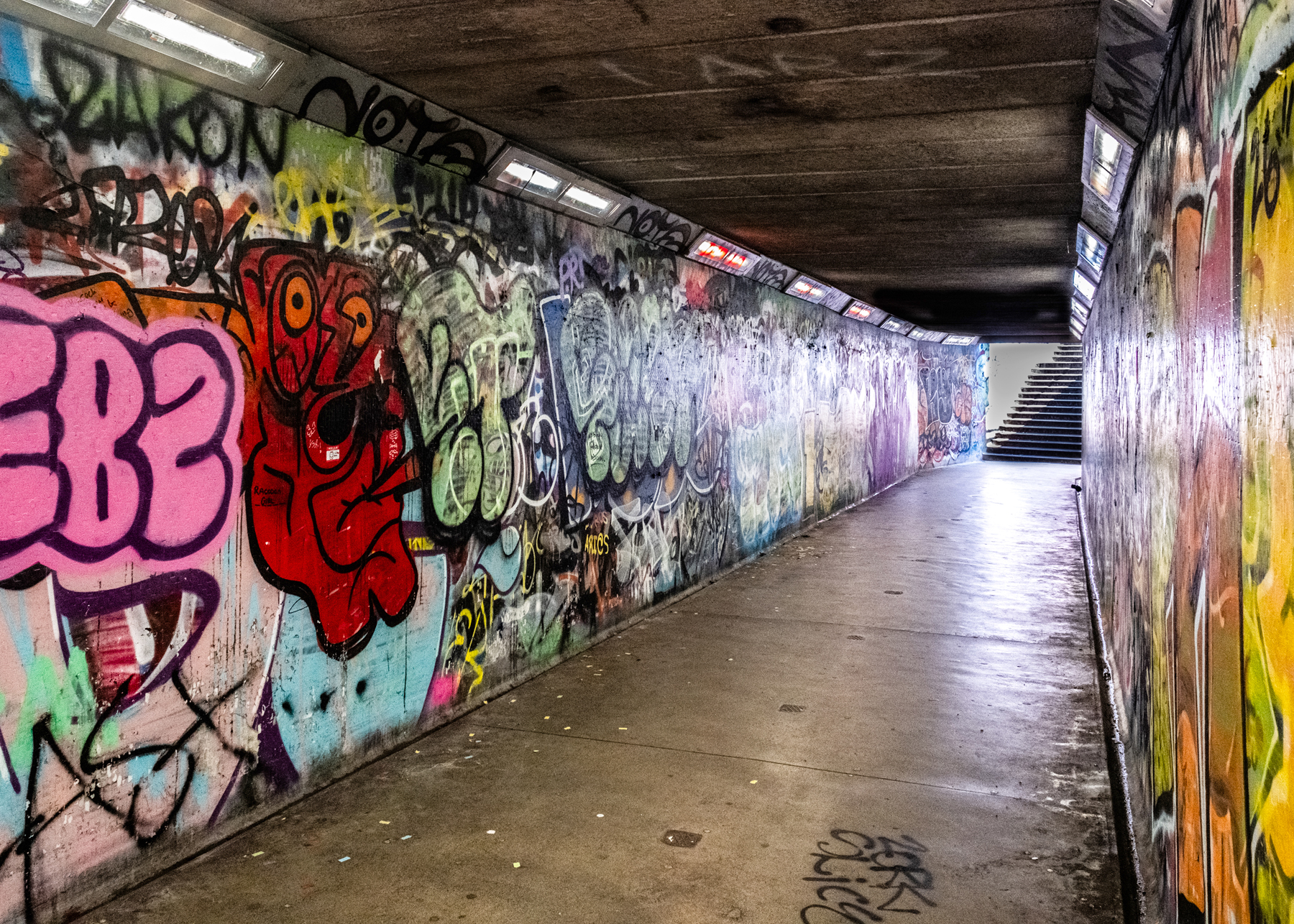
The answer, of course is simple. Bring a camera, and leave her too it. That was my course of action a few weeks ago, when I left Janette in the care of the retailers, and wandered off on my own with the Fujifilm X-T50, and headed for Belfast’s touristy dockland, once the home of the coal boats, and the shady haunts of visiting seamen – now a venue for visiting cruise ship passengers and folk on city sightseeing bus tours. Safe access from the shopping area of the city to the docks is via an underground walkway, amply adorned with vivid graffiti.
I was wandering about Belfast City Centre, with the Fujifilm X-T50, and quite honestly, I was tired! It had been a busy week, and the old heart arrhythmia was playing up. I needed somewhere to sit down for a few minutes. It was then I came across No.2 Royal Avenue and being a public building, owned by Belfast City Council, I wandered in to see what was inside. It’s an open space inside, with lots of seating and a cafe, and a library and a piano, which someone was playing, – very nicely too. I took a seat, wondering how long it would be until someone came and asked me why I was there… But it didn’t happen.
The building, described by the City Council as an ‘Indoor Park,’ is for everyone to enjoy, and all are welcome. I sat inside the building for around 20 minutes, just to get my breath back, and rest my legs, and it was while I sat there that I noticed this truly magnificent dome, and as you’d expect, it was just asking to be photographed. (I did ask one of the staff members for permission – and they were most obliging, – there’s no problem with photos inside the building, so long as no-one else objects).
Another gem of Belfast’s architectural heritage, this Grade B1 listed, triangular building (known locally as ‘the smoothing iron’) in Little Donegal Street, Belfast, was once the premises of Robert Watson’s furniture manufacturing company, suppliers of beds to the Royal family, and whose beds were installed in many luxury liners built in Harland and Wolff, the Belfast shipyard, including the Titanic. The building was designed by William J Fennel and built between 1898 and 1907, originally known as ‘Library House.’
As a boy of 12 or so years of age, so, in the late 1960s, a real treat was a Saturday afternoon in Belfast City Centre with my grandfather, – for although he seemed to spend ages browsing through the stock in various tool and equipment stores, – what would probably be known now as DIY shops. But the compensation for this period of boredom would be when we eventually got to Smithfield, the old ‘shambles’ style covered market in between Royal Avenue and Millfield, off Gresham Street. Smithfield wasn’t a market with stalls, nor a modern style shopping centre, but a unique shambles of musty run-down outlets packed with books, records, tools, second hand furniture, bric-a-brac and much much more, including a popular ‘joke shop’ – every small boy’s favourite.
To get to Smithfield from the city centre bus stops required a walk along Queen’s Street, and then along Chapel Lane, and past the Roman Catholic Church of St Mary, and its strange and imposing Marian shrine. To a small boy, not of the Catholic persuasion, and unused to Catholic piety, the shrine appeared mysterious, unwelcoming and even frightening. We hurried past it with eyes looking away and heads bowed.
A city centre walk around Belfast brought me to Royal Avenue,, where classic Victorian architecture clashes with garish modernism. This example stands out…
Fujifilm X-T50 F=18mm, f/5.6 @ 1/60th sec, on ISO80.
Caught a moment of calm, just off the hustle and bustle of Belfast’s busy Royal Avenue, a homeless street person, lost in the pages of a book, challenges our perceptions, reminding us that not everyone in those circumstances is there because of illiteracy or wasted opportunities, or substance addiction. For the photographer, such stories can be found everywhere, even in the most unexpected places.
The Fujifilm X-T50 captured this seemingly contradictory slice of life.
In the heart of Mount Vernon estate, a powerful mural stands as a poignant reminder of sacrifice and bravery.
This tribute honours the fallen heroes of the 1st World War, especially those who served in the 36th Ulster Division. A story of courage, loss, and remembrance, echoing the voices of those who gave everything for our freedom.