I don’t NEED another camera. I really don’t, and I keep telling myself that, but it never seems to work! When the Fujifilm X-T50 mirrorless digital camera came along in June 2024, it just tugged at my heartstrings so much, I knew that one day my resolve would weaken… So, I’ve got one, despite the fact that I’ve already got an X-T3 and an X-T5. (And of course, a half dozen or more film cameras). Overkill, some might say. My self-justification for the purchase, and I suppose, my excuse to finally yield to the temptation came when the price of a new X-T50 camera body dropped from £1299 to £1149.

The price point is interesting in itself. Fujifilm’s flagship X-T5 camera body sells, now at around £1499, just £349 above the X-T50. Up to now, cameras in the ‘X-T00’ range, were considered a medium priced entry point to the X system, so the X-T30 (released on February 14, 2019 as a smaller, lighter, and more affordable version of the X-T3 with a 26.1-megapixel sensor) entered the market at around £899, making it accessible to the dedicated enthusiast. Second hand they are still fetching around £500-600. Its upgrade, the X-T30ii, introduced in September 2, 2021, and still on sale at the time of writing, retails now at around £850 on Amazon, although stock seems to be running low. So why the huge jump to £1149 for the X-T30’s replacement? It could be the massive upgrade in sensor quality that is forcing up the price, or is Fuji trying to open up a new market, somewhere between its enthusiast range and its professional range? Time will tell.

Pub quiz sign in Fountain Lane, Belfast, photographed with the Fujifilm X-T50 camera.
So I’ve had the X-T50 camera for about three weeks now, at the time of writing. And I have to say, it’s a nice instrument to hold and to use. Subjectively speaking, I like its body design, – it feels a tiny little bit ‘chunkier’ than the X-T30, a solid build quality and I can hold it comfortably with a decent medium-range zoom. It’s also smaller and lighter than the X-Tx cameras, which makes it ideal for travel, especially on public transport (Handy when you’ve a bus pass!) and perfect for street photography. Pair it with a Fuji kit lens (which I didn’t buy) say the Fujinon XF 18-55mm F2.8/4 R Lens and you’ve got a lightweight, compact and powerful street machine.
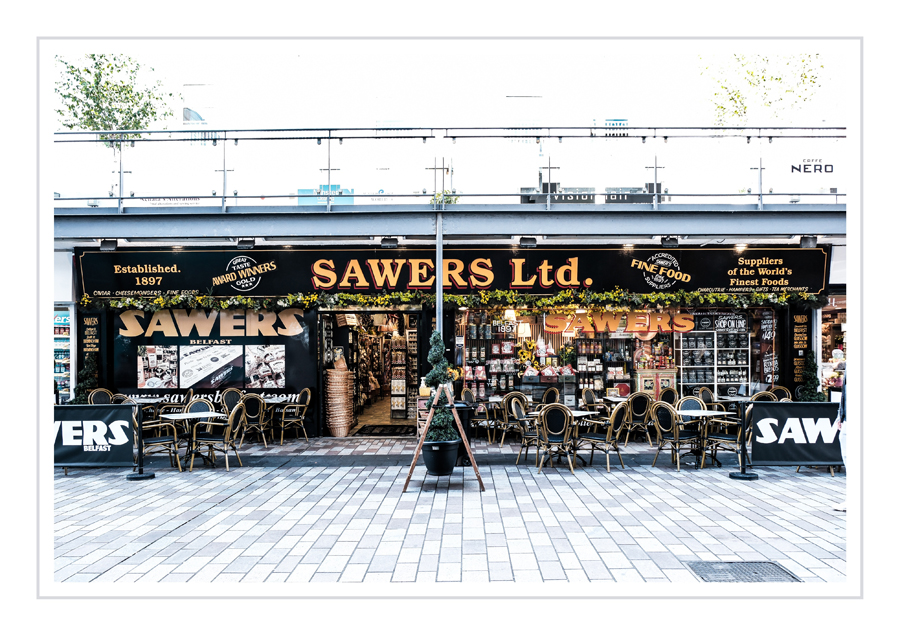
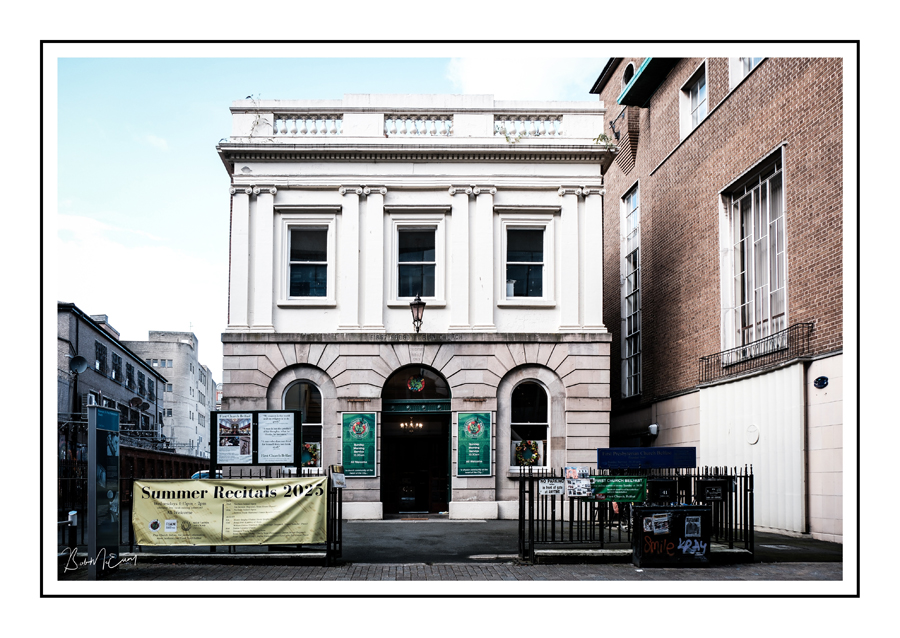

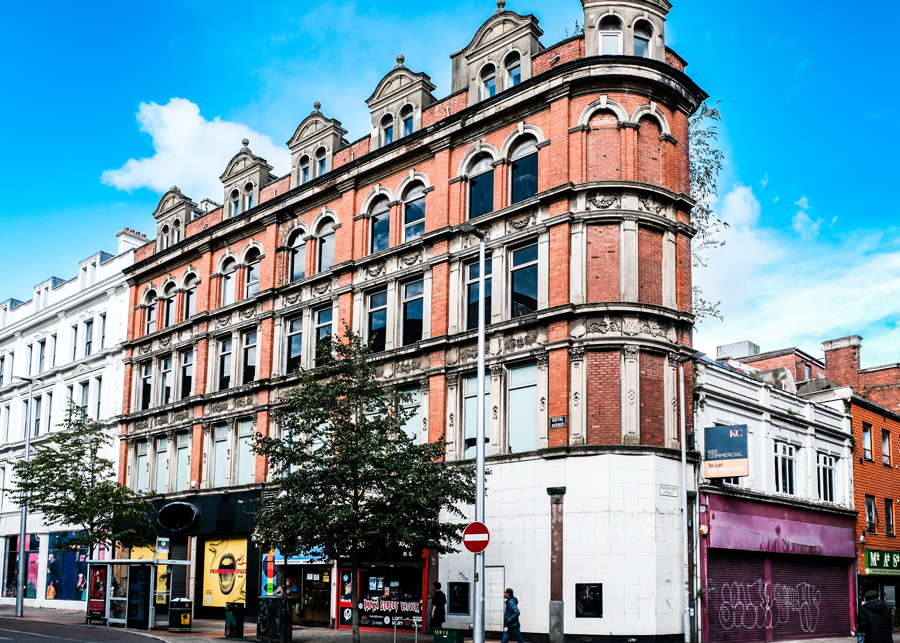
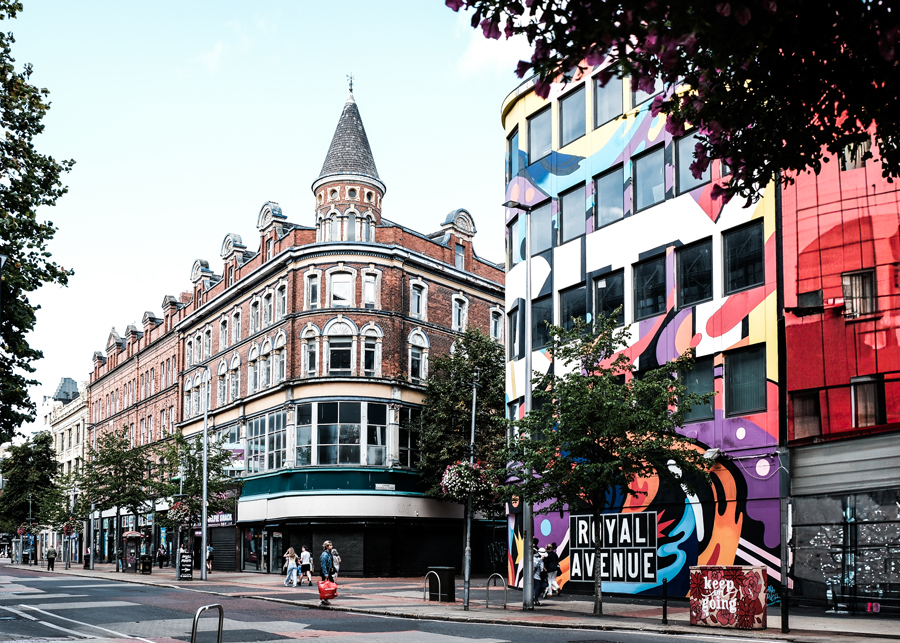
BODY & BUTTONS!
Like the other X-T cameras, the X-T50 has a retro design, with a body shape similar to a film camera (a Nikon film camera, in my opinion, which suits me just fine, since I cut my teeth, photographically, on a Nikon FM2) and has tactile analogue style command dials. Put it this way, it looks like a camera, not a shapeless blob of plastic.
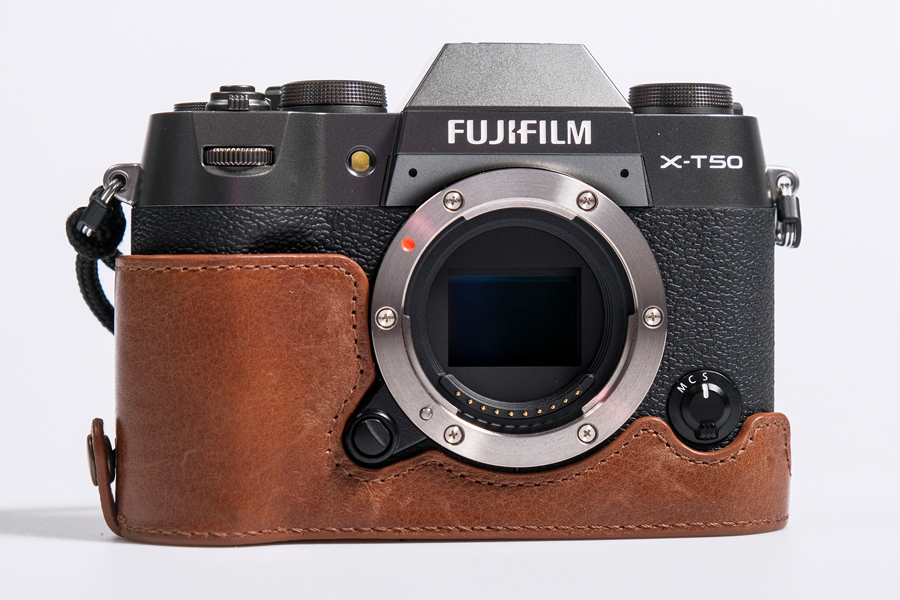
One innovation though, is that the dial on the photographers left of the camera, usually an ISO dial, has been given over to the camera’s film simulation settings. Fujifilm is famous for their range of film offerings, and Fuji X-T cameras have featured film simulations, for old film favourites, like Velvia, Astia, Acros, etc. But on older models, and on the X-T5, the option to select a film simulation setting is tucked away in the Quick Menu. Now a turn of a knob can change the setting. But will that be welcomed? How many modern digital photographers remember the difference between Velvia and Provia, and how many care? Again, time will tell, if the film simulation knob remains a feature on future models. Incidentally, the camera also offers film simulation bracketing, which you can find in the shooting menu.

DIGITAL TELE-CONVERTER
Another innovation is the digital telephoto feature. I came across this by accident – because like most men (I’m told) I never trouble myself with reading an instruction manual. I was flicking through the settings menus when I saw it in the shooting menu. ‘Digital tele-converter!’ There are two settings and with my medium range zoom fitted, an 18-135 f/3.5 – f/5.6, it increases the range of the lens by 1.4 times or (with two clicks) 2 times. I can’t wait to see what it can do with a 300mm lens.

Of course, there is a minor drawback, because the greater digital magnification decreases the size of the file, with the original 40 megapixel sensor resolution being reduced to 11 megapixels at 2x magnification. But this is hardly much of a disadvantage. When I introduced my very first professional digital camera into my wedding photography practice, it was a Nikon D2X, DSLR with just 12 megapixels, and it was considered very high end. So impressed am I with this feature that I’ve assigned it to one of the buttons near the viewfinder, so I can adjust the telephoto length without having to assess the menus. Perfect!
WHAT’S INSIDE.
As I’ve said above, the XT50 has an amazing 40 megapixel sensor – the very same sensor as its bigger cousin, the X-T5, and that’s remarkable in such a small body. Not so long ago, high end digital medium format cameras had around 50 megapixel sensors in much, much larger bodies. But the X-T50’s smaller body, smaller compared with the D-T5, comes with a cost. It has only one memory card slot, unlike the 5, which has two. That may be a drawback for those who want to shoot video, and need to record to the cards consecutively, or for those who like to shoot in both RAW and JPEG simultaneously, or for professionals who like the comfort of having a backup card, should one fail on a job. But SD cards are so reliable nowadays. Buy a good quality card, like a Sandisk, and it’s unlikely that there’ll be any problems.
IBIS & SUBJECT RECOGNITION
Also inherited from the X-T5 is the X-T50’s in-body image stabilisation, a kind of gyroscope effect, which automatically adjusts some of the camera elements to keep the image in the viewfinder perfectly in focus. Fuji had previously featured image stabilisation in some of their lenses, but when the X-T4 was launched in February 2020, its attraction was its image stabilisation, allowing slow shooting hand held, and a boon for sports photographers. The X-T5 went further allowing up to 7 stops of IBIS. That same processor is in the X-T50. There’s other benefits too, for those who want to photograph moving subjects, like cars, birds, dogs, footballers and athletes. Both the X-T5 and the X-T50 have dedicated focus modes for moving objects. Facial recognition for people, coupled with the wide/tracking focus mode and continual focus will cope most athletic activities, while a single click of the quick menu button will give access to subject recognition: pets, planes, vehicles etc.
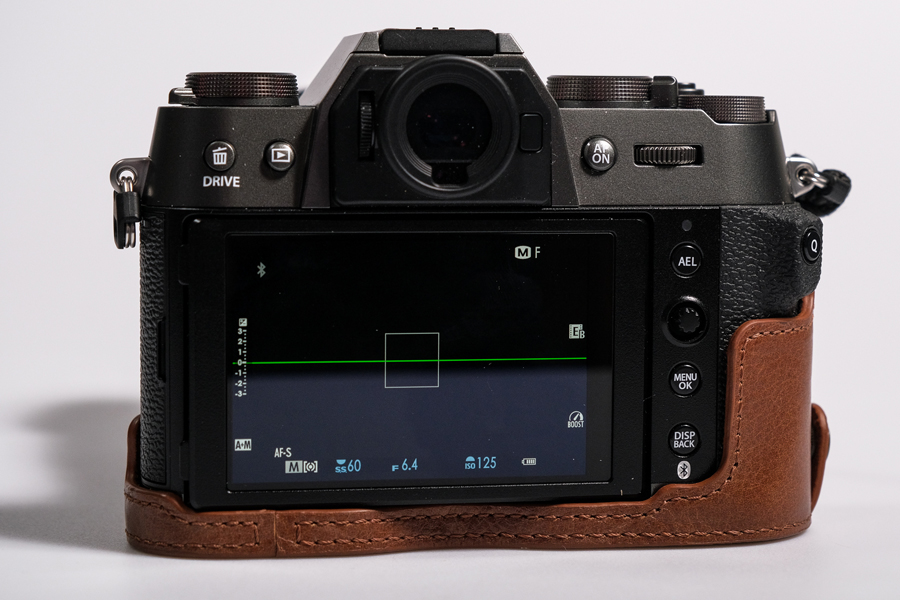
Add all of the above to the standard advantages of mirrorless cameras in general, like the WYSIWYG viewfinders, and lack of mirror shudder allowing handheld shooting at much slower speeds, completely silent shooting when needed, and the X-T50 is a ground breaking, powerful imaging tool.
NIGGLES.
So it’s all positive then. Or is it? Not quite. Every camera has pluses and minuses, and the lower price and smaller body does come with compromises. My first few exposures with the X-T50 caused me to think I’d inserted the wrong memory card, despite having asked the salesman for the fastest card in stock. I checked. No. The card was fine. 200 mb/sec transfer speed. I checked that I wasn’t shooting on raw. No. I wasn’t. But the X-T50 is slow to write to disc! At least I thought so, compared to the X-T5, which I use for sports photography and which can shoot, write and almost instantly be ready for the next runner. The X-T50 can’t write that fast.
Battery life too is a bugbear with these smaller cameras. Obviously they need a smaller battery, and that means more frequent charging. So I carry spare batteries, and charge up in the car using the USB cable.
Finally, in the ‘minus’ category, the X-T50 has been stripped of the X-T5’ weather resistance. That’s a pity, but I suppose Fuji have to leave the X-T5 with some advantages to justify the higher price.
SUMMARY
Overall though, a lovely, rugged, retro-style camera, with amazing performance in a small footprint, ideal for street photography and landscapes, producing large images with vibrant colours and deep tones. A good investment.
Of course I had to explain this reckless expenditure to her indoors. I softened the blow (I think) by mentioning that I’d just sold a valuable film camera for £1k and promising that I’d divest myself of one of the older Fujifilm cameras, probably my X-T3, which is now around 7 years old. I went to get it a few times to take it up to the ‘studio’ to prepare images for an auction, but every time, I just haven’t the heart to do it. The X-T3 is an old friend, and it seems callous to betray it when it’s been so faithful, in studio and on many, many location jobs.
Maybe I’ll just wait a while longer and see…
 Portraits2Go.co.uk