Tag Archives: History

No.2 Royal Avenue: A Community Hub in Belfast

No.2 Royal Avenue

I was wandering about Belfast City Centre, with the Fujifilm X-T50, and quite honestly, I was tired! It had been a busy week, and the old heart arrhythmia was playing up. I needed somewhere to sit down for a few minutes. It was then I came across No.2 Royal Avenue and being a public building, owned by Belfast City Council, I wandered in to see what was inside. It’s an open space inside, with lots of seating and a cafe, and a library and a piano, which someone was playing, – very nicely too. I took a seat, wondering how long it would be until someone came and asked me why I was there… But it didn’t happen.

The building, described by the City Council as an ‘Indoor Park,’ is for everyone to enjoy, and all are welcome. I sat inside the building for around 20 minutes, just to get my breath back, and rest my legs, and it was while I sat there that I noticed this truly magnificent dome, and as you’d expect, it was just asking to be photographed. (I did ask one of the staff members for permission – and they were most obliging, – there’s no problem with photos inside the building, so long as no-one else objects).

Continue reading No.2 Royal Avenue: A Community Hub in Belfast

Exploring Chapel Lane: A Journey Through Belfast’s History

Chapel Lane Belfast

As a boy of 12 or so years of age, so, in the late 1960s, a real treat was a Saturday afternoon in Belfast City Centre with my grandfather, – for although he seemed to spend ages browsing through the stock in various tool and equipment stores, – what would probably be known now as DIY shops. But the compensation for this period of boredom would be when we eventually got to Smithfield, the old ‘shambles’ style covered market in between Royal Avenue and Millfield, off Gresham Street. Smithfield wasn’t a market with stalls, nor a modern style shopping centre, but a unique shambles of musty run-down outlets packed with books, records, tools, second hand furniture, bric-a-brac and much much more, including a popular ‘joke shop’ – every small boy’s favourite.

To get to Smithfield from the city centre bus stops required a walk along Queen’s Street, and then along Chapel Lane, and past the Roman Catholic Church of St Mary, and its strange and imposing Marian shrine. To a small boy, not of the Catholic persuasion, and unused to Catholic piety, the shrine appeared mysterious, unwelcoming and even frightening. We hurried past it with eyes looking away and heads bowed.

Catholic Grotto in Chapel Lane, Belfast.
Continue reading Exploring Chapel Lane: A Journey Through Belfast’s History

Belfast ‘Troubles Tourism.’

One of the growth sectors, it seems, in Northern Ireland, at least since the so-called ‘ceasefires’ of the 1990’s has been ‘Troubles Tourism,’ where visitors to the city are given guided tours of relics of the troubled past pf the region. You can book a ‘Troubles Taxi Tour’ from around £75. Hotels, travel and holiday companies and cruise ships are including Troubles Tourism in their itinerary offerings. Visitors take open-top buses, coaches, bicycles and walking tours, looking at the locations of riots, bombings and shooting, photographing political murals and of course visiting the infamous Belfast ‘PEACE LINES’
The Peace Line at Northumberland Street,,- a wall that has divided the unionist Shankill Road from the nationalist Falls Road for around 50 years. It’s still there and still needed 27 years after the ‘Belfast/Good Friday Agreement.’ The gates are closed during hours of darkness. 
Continue reading Belfast ‘Troubles Tourism.’
Annadorn Dolmen at Loughinisland, Co.Down

Annadorn Dolmen at Loughinisland.

I’ve photographed the Dolmen at Loughinisland before, including around a decade ago, when I shot a wedding scene there, but when passing by from a nearby job, I couldn’t resist stopping for a quick snap or two. It was 17th January, temperature was just above freezing, and bright winter light from a low sun was casting long dark shadows and frost still on the ground, at 11am, in the shadow areas.

I took the Fujifilm X-T4 up to the dolmen with me, and three lenses, a standard zoom, a 300mm zoom and a Lensbaby.

Continue reading Annadorn Dolmen at Loughinisland, Co.Down

Jennymount Mill

Jennymount Mill

Jennymount Mill is a relic of Belfast’s Industrial Past, situated beside the busy M2 Motorway in North Belfast. Needless to say, to attempt to photograph the Mill from the motorway angle would be both illegal, and dangerous, probably fatal. But when one is in the passenger seat of a passing vehicle, with a camera and a clean window, it’s probably ok to get a quick snap – but don’t distract the driver.

Jennymount Mill, Oil Effect
Continue reading Jennymount Mill

Drumbo Round Tower

Between Carryduff and Lisburn, with views across Belfast and the Lagan Valley lies the hamlet of Drumbo, with its historic Round Tower, now situated the graveyard of the Drumbo Presbyterian Church.
Drumdo Round Tower, Fujifilm X-T30, F=24mm, f/13 @ 1/200th sec on ISO500

The tower is one of the oldest monastic monuments in Ireland, dating from around the early medieval period. It was around in AD1130 when records show that it was plundered by one Connor McLochlin.

Continue reading Drumbo Round Tower

Templemore Baths Belfast (Part 2)
In December 2019 I had my attention attracted (or ‘distracted’ since I was driving!) by the old Templemore Avenue Baths, – for there were no cars parked in fort of it – which is unusual, and that fact prompted me to actually get out of the car and make some photographs.

DSCF7512B

 So,you can see the original post here:

Templemore Baths (Part 1)

So, when I discovered that one of my ‘Baby’s First Year’ mums worked at the Baths, needless to say I asked for quick look inside, and so with the help of David, Sam and Sharon, I got a great tour of the inside of the building, and just in time too, for the building just about to be stripped inside, and incorporated into a new state of the art leisure complex being built on the adjacent site.  Here’s some (but not all) of the photos…

The Boiler Room was my starting point.  in a lower floor below ground level, the machinery there is still working (for the community group who have been using the building) but no less interesting for that.

TemplemoreAv_66

The Baths had two pools, and the small of the two has been disused for quite some time.

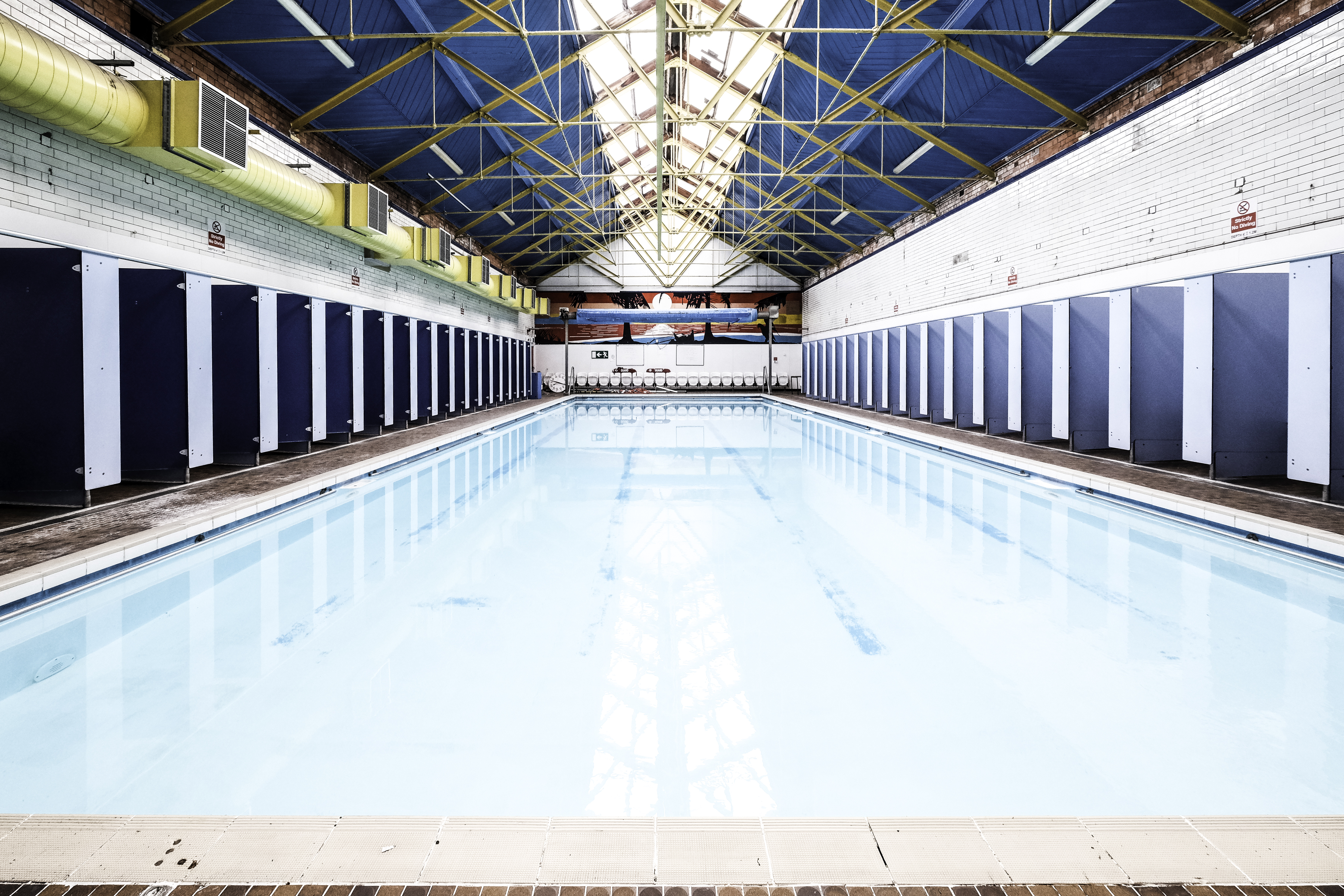
The larger pool is still in use at the time of writing.  It features little changing cubicles along the sides of the pool – probably considered unhygienic by modern standards, but perfect for the period in which the structure was built.  Thanks to David for removing the pool cover to let me see the water!

TemplemoreAv_16

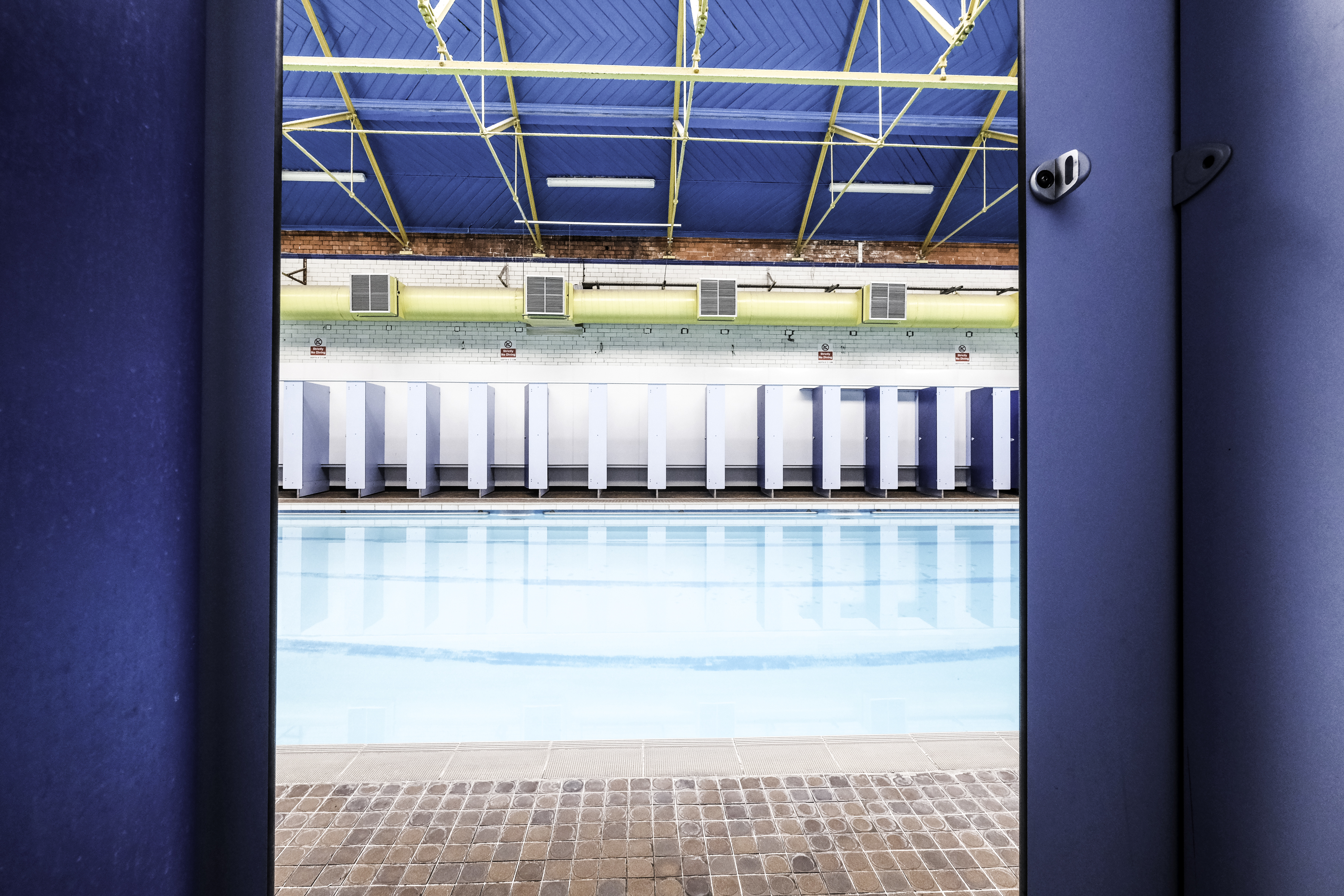
I sat in one of the cubicles to get a swimmer’s view of the pool…

TemplemoreAv_25

The most interesting part of the building is the actual bathrooms themselves, and these will be in Part 3 – following in a day or two.  I’ll post a link here.

The Templepatrick Mausoleum

A visit to the Mausoleum at Templepatrick (Co.Antrim) requires some diligence and persistence – just to find it!  It is signposted from the road opposite the Templeton Hotel, and the passage to the site lies within the historic Castle Upton Estate.  Nowadays the monument is owned by the National Trust.  A visit is rewarding though, for the site is historic, including not only the Templetown Family mausoleum, but also the grave of the first Presbyterian Minister of Templepatrick, Rev John Welsh, the grandson of John Knox.

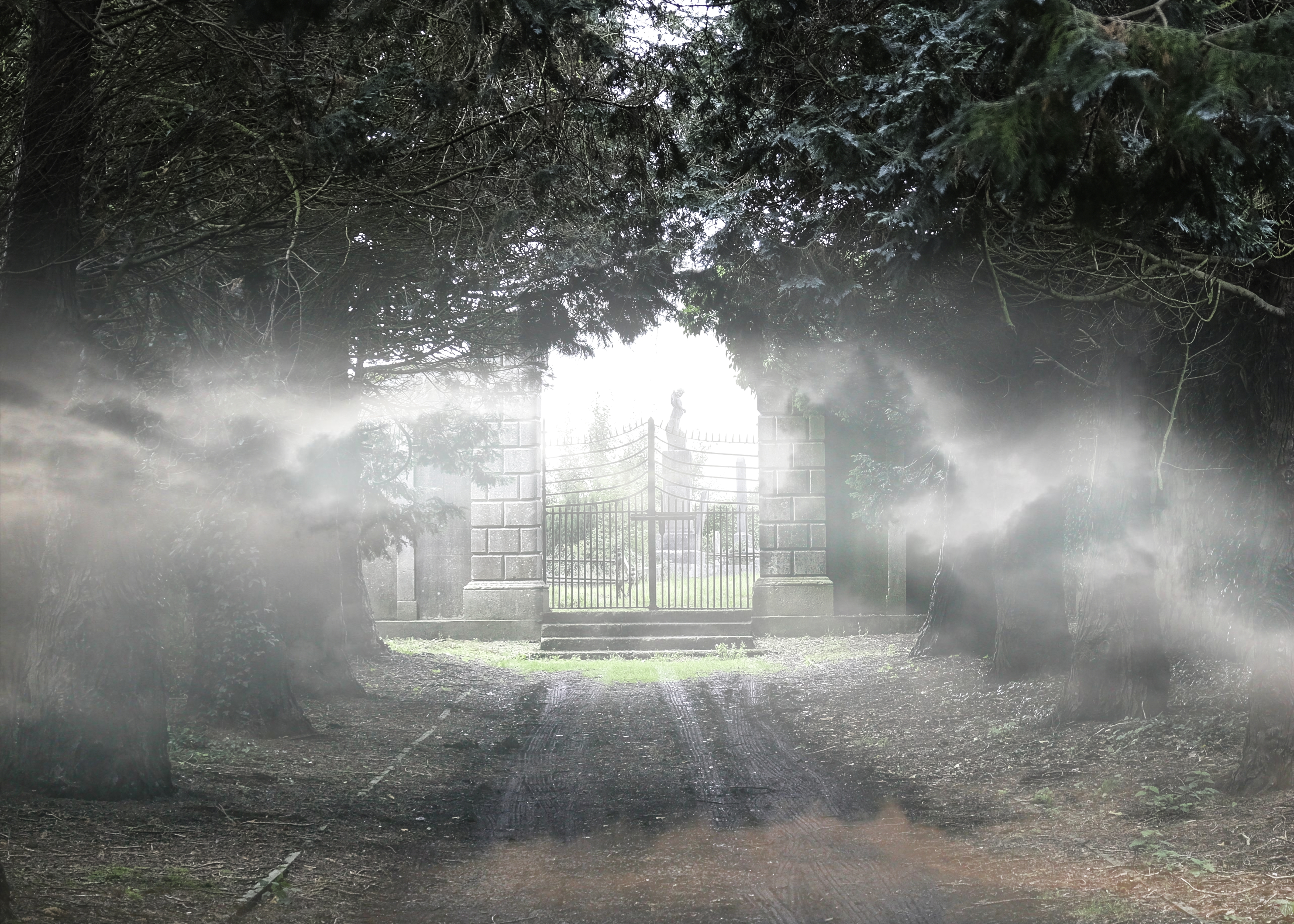
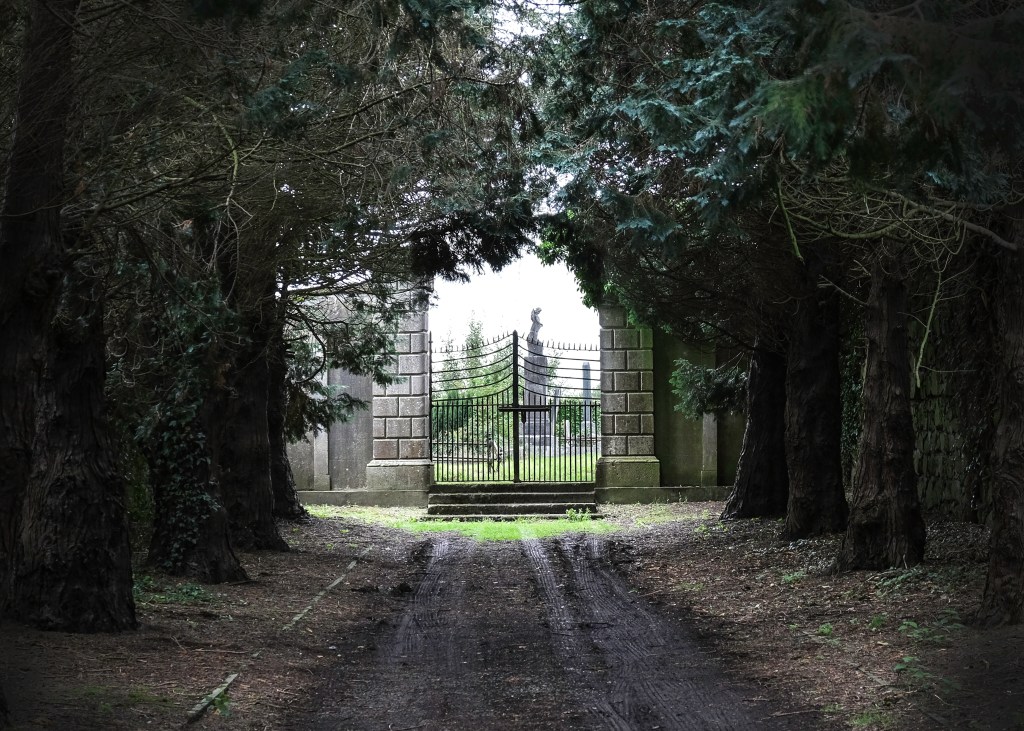
The approach to the graveyard is by way of a tree lined pathway, which lends itself to the ‘spooky fog’ treatment in photoshop!  (Don’t worry, you can see the ‘untreated’ image in the next montage.  Images were made with the Fujifilm X-T30 and a standard zoom, 18-55mm lens.

DSCF0930_pe
The Gate to the Mausoleum – Spooky! F=39mm, f/4 @ 1/60th sec on ISO800


DSCF0930B
Pathway and gates F=39mm, f/4 @ 1/60th sec on ISO800

DSCF0936
First view of the mausoleum from the gate.F=28mm, f/11 @ 1/60th sec on ISO400

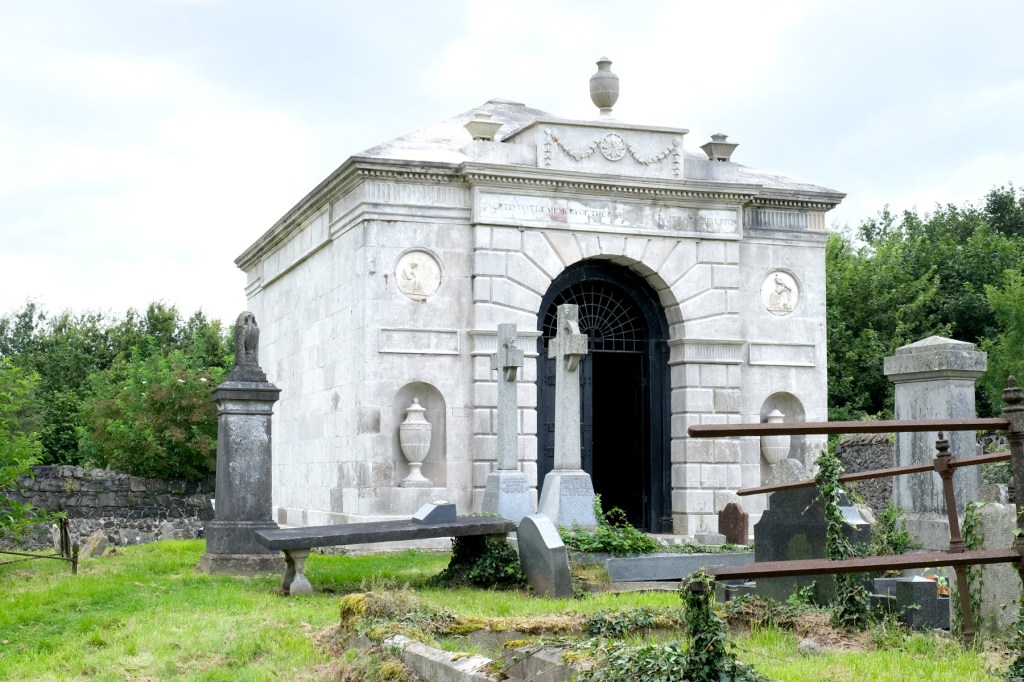
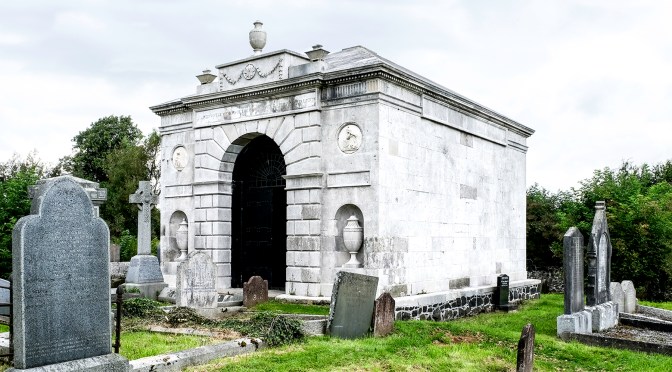
The Mausoleum was built by the Scottish architect Robert Adam for the Upton family in 1789.  It contains memorials to some of the family members.  On the day I visited the monument was open and access to the inside was certainly interesting.

DSCF0942.jpg
The Mausoleum Interior. F=18mm, f/2.8 @ 1/60th sec on ISo3200

The best shot of the Mausoleum is from the far side of the graveyard.  Although the ground is uneven and the graves squashed close together, the graveyard can be crossed with care for a rewarding photograph.

DSCF0953_Pet
The Templeton Mausoleum at Castle Upon Estate F=18mm, f/13 @ 1/60th sec on ISO400

Fujifilm X-T30, 18th August 2019, 6pm, overcast/patchy clouds – daylight.  Average reading was f/5.6 @ 1/250th sec on ISO200,