Category Archives: Photo-Technique

New Year, New Gear!

It is 2018, and work has begun again after the Christmas break.  2017 was a whirlwind year, with studio appointments peaking to 50 portrait sessions and 10 commercial sessions in November. My New Year Resolution is to slow down, take life a lot easier, and get out into the streets more with a camera.

And there’s the point.  After Christmas I decided to invest in a new camera, and logically it should have been a Nikon D850, after all, I’ve been shooting with Nikons for around 30 years, my lens system is all Nikon, and the D850 is getting rave reviews.

But wandering around the streets with a huge Nikon DSLR,  and a lens to match, = it’s hardly unintrusive.  Some of my wedding photographer friends have been turning to mirrorless cameras.  I was sceptical at first, but I decided that before I’d buy my new Nikon I’d weigh up the pros and cons of buying a Fujifilm X-T2:  Continue reading New Year, New Gear!

Getting the Levels Right

Here’s a useful wee gadget I use in the studio. Made by Lastolite, it helps set the white, black and grey points in post capture processing. 


I simply meter the light in the studio, set the camera to the appropriate aperture and shutter speed (usually 1/125th sec) and then take a shot of the triangle thingy. 

In Lightroom, I will then adjust the white and black sliders to show the triangle as perfect white and black. I select all the files then sync the settings. 

That’s it. All the levels in the whole shoot are now set!  

Nikon FG20 

I picked up this old camera yesterday from my good friend Raymond Cotter. A 1984 Nikon FG20. It was in a pile of cameras in the charity shop. I wrote it off as worthless and he let me have it for display purposes in the studio along with other old camera examples. Last evening I got it out, fixed a Sigma manual focus lens, cleaned it up, and tested its meter. It’s perfect! There’s a wee problem with the film winder, but otherwise it’s in good enough condition. 


Today I’ll load it with Ilford 400ISO Black & White and take it in a test drive. 

If it works – my conscience will be severely tested and I’ll be down to make a donation asap!

I’ll update this post with the results!

Photo-Restoration

Memories are very precious, – but sometimes. like us, they grow old and faded with time. Somewhere under a bed, or tucked away in a cupboard or attic, you probably have a shoe-box full go memories, old photographs, black and white negatives etc… How good would it be if those old memories could be brought to life and given their rightful place in an album, or among the family memoirs.

We can help. With our expertise in image reproduction, and professional equipment, we can take old and timeworn photographic artefacts and restore them to what they once were.

restoration

So, if you are building your family tree, clearing out a house, or just nostalgic about your family history, we can help. Ask for a personal quotation for scanning, digitising and printing negatives and slides, and repairing and reproducing existing photographs.

Study Photography at Harvard (Sort of!)

Did you ever dream of studying Photography at a top USA university? 

 Of course it would only ever be a dream. How would you manage to take three years out, move to America, pay all the fees. It’s an impossible dream. 

Or is it? Harvard University has made its photography course available on-line and it’s FREE! Do even on this side of the ‘pond’ you can get some serious motivation for your photography and learn loads more about the craft, including camera techniques, digital enhancement and much more. There’s even a module on my old favourite, the History of Photography. 

Click this link for more info:-

https://alison.com/courses/Digital-Photography/content

Photogenic Christmas!

Bob’s Top Tips for Taking Great Christmas Photos
Christmas is a great time for family photos so whether it’s a kids party or a visit to Santa or the big day itself, always keep your camera handy!  

1) Get In Close – it’s the faces you’re interested in, not the shoes. Fill the frame with the face or faces. 

2) Keep it natural – don’t over-pose pictures – natural pictures are often the best ones. Keep your camera ready and take peoples pictures when they’ are not looking. This is especially true for children.

3) Get down with the kids: while your children are playing with the Christmas presents you want to be down on your knees or tummy photographing from their height.
4) If you are posing to be in a photo – guys face square forward and look big. Girls should turn slightly sideways and kick the hip out for a more feminine shape.

5) If you’re a couple, girls should rest their head on the fella’s shoulder for a nice relaxed, but loving and joined portrait.

6) If you’re shooting one person, then put them off-center in the frame rather than bang in the middle – it makes a more interesting picture.

7) If you’re shooting a couple make sure your camera is not focusing down the gap in the middle of them – leaving you with an out of focus picture.

8) If you’re shooting three or more people, try and arrange the heads into a triangle, or a circle if there’s lots of people – this makes a much stronger composition.

9) Lots of Christmas pictures are taken at parties – but try and keep the drinks out of shot – they look messy and ruin many a good photo.

10) If you can, try and shoot without flash – many new digital cameras can shoot in quite dark places without flash – the images will look much more natural.
11) If you have to use flash – see if your camera has a “night” mode – this will make sure your subject is properly lit, but will also show the background well too.
12) Backgrounds are interesting too – and let you remember where you were when the picture was taken. 

13) Bounce your flash! If you’ve got an add-on flash unit that fits to the top of your camera – tip it towards the ceiling to “bounce” of the ceiling – it’s a much nicer light and also stops red-eye

14) See if you can find a plain wall as a background, doesn’t matter what color – but if you get a choice blue works best for faces. Look out for fire signs, plant pots, etc. Don’t stand the subject right against the wall though – the more space between your subject and the background the better.

15) Take a second picture straight after the first – often the moment when people relax after they think the picture has been taken is the best one.

Sleeklens -Workflow for Portraits

I’m a recent convert to Adobe Lightroom.  When digital photography became a serious possibility in the professional photography world, I quickly realised that I was going to need Photoshop skills, but having learned the basics of Photoshop, I was disinclined to have to learn even more new skills. The phrase, ‘Old dogs, new tricks’ comes quickly to mind.  So despite all the seminars and articles extolling the virtues of Lightroom’s Cataloging and Developing capabilities, I flatly refused to have anything to do with it.  Ok.  I’m a Luddite! Continue reading Sleeklens -Workflow for Portraits

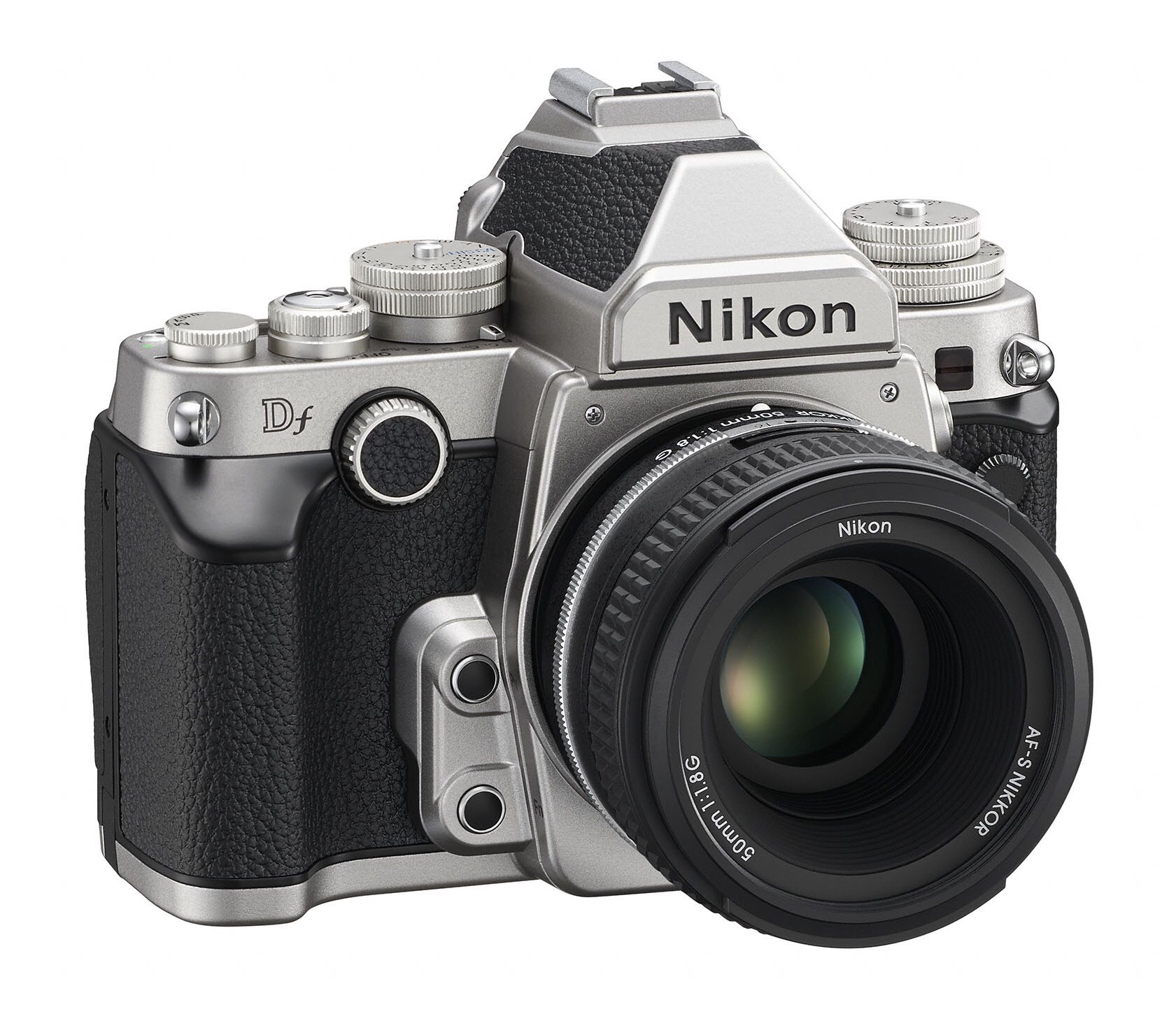
The #Nikon Df

It’s here!

My new Nikon Df has arrived!   The ‘f’ (apparently) is for ‘fusion’ and this camera is a perfect fusion between the old Nikon FM cameras and the Nikon Professional Digital range. It has the same sensor as the top of the range D4 but, designed for ‘pure photography’ it has no video capability. Which suits me just fine. 

The big advantage for me is the manually operated knobs. No more fiddling with digital controls!    


Wiki
:

  • The Nikon Df is a full-frame F-mount DSLR FX format camera announced by Nikon on November 5, 2013. It uses dedicated mechanical controls similar to those used on mechanical 35mm film SLR camera and has an appearance similar to the Nikon FE and Nikon FM film cameras.[1] Nikon’s website states “Using its large, metallic mechanical dials, photographers will rediscover a more direct connection with their camera.”
  • It has the same sensor overall score 89 of DxOMark with Nikon D4, the Nikon Df ranked first in a low-light test with 3279 ISO (Nikon D4 with 2965 ISO), but in practice the difference is small
  • In a departure from the rest of Nikon’s DSLR lineup, the Df does not record video, only still images; while most reviews were generally positive, this and other built-in limitations of the camera were seen as negatives. Also notable by their absence were built-in flash and a variety of automatic modes, though the backward lens compatibility extends to lenses from 1959