There’s something really intriguing about human silhouettes, – they excite the mind.Perhaps it’s the sense of mystery they evoke.Who are these people?What are they doing,and why are they here?In a moment of time, they have been captured forever against a background of light.It’s evocative, – silhouettes make the brain work, trying to piece together the missing information, stimulating those little grey cells and producing the chemicals that trigger our emotions. Continue reading How to Make Silhouettes→
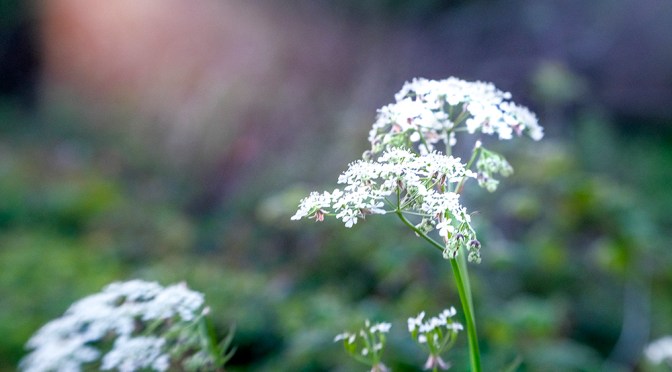
Who doesn’t like nice flowers – apparently this one’s a Fuchsia – although to be honest, I thought it was a honeysuckle – but then, what would I know? But I do like bokeh – the creamier the better! This shot was made with the Fujifilm X-T2, with a 55mm lens opened up to f/2.8. I’ve brightened up the background a bit in post capture processing, and added a border.
Fuchsia
Here’s the small print: Fujifilm X-T2. F= 55mm f/2.8 @ 1/250th sec on ISO200.
Let’s face it – landscape photography is not for me! Successful landscapes seem to involve lots of early mornings, long arduous climbs to the top of mountains, hours of patient waiting for the sun to be at exactly the right point in the sky, or for the tide to turn… All much too energetic!
But I do find cityscapes to be intriguing, – I like the Belfast skyline when I’m passing through the city, and wandering the streets with a camera, making images of historical buildings, churches, dereliction, narrow entries and architecture can be really worthwhile and fulfilling.
Progressing and Sustaining Your Photography Practice – a Strategy for Personal Progress
I’m starting to panic! In another six months or so, I’ll be an OAP! A ’Senior Citizen!’ Now, I’m not in any way thinking that on my 65th birthday I’ll be locking the studio door and throwing away the key! That’s not going to happen – not in this day and age, – but I’m curious as to how I’m going to practice photography with the same drive and enthusiasm when it’s no longer my source of income! A recent read through a photography degree course curriculum confirmed my own thoughts. One of the modules was ‘Developing a Strategy for Personal Progress’ So what’s MY strategy – for when retirement finally kicks in?
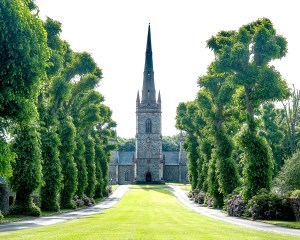
This church at Hillsborough is popular with photographers. And why not? Look at the image!
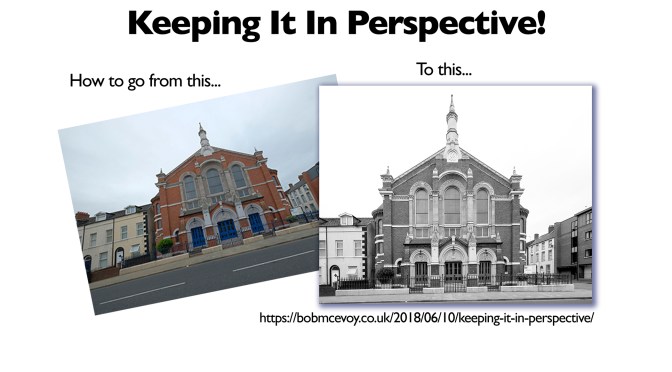
There’s a pretty scene in there, with lots of the elements of design. There’s colour and shape, there’s lines drawing the eyes into the church, the central focus of the image. But there’s one problem. In many photographs of the church the trees are seemingly angled inwards, a distortion of perspective. It’s a natural lens effect, because the lens is low (usually at eye level) and the trees are high… Continue reading Keeping It In Perspective→
I’ve recently aquired a LENSBABY! It’s the LensBaby Composer Pro 2 lens with Sweet 50 optic. Basically a LensBaby is just a lens with a ball-joint, so that the lens can be bent! Attached to the front of the lens is a removable optic, in my case a 50mm attachment, with a sweet-spot. That’s an area that is in focus, while the rest of the image is blurred. (Bokeh) Ok, it’s easier to show you than explain in words…
If the aperture controls the amount of light that falls on the camera sensor/film, the shutter determines how long that light falls on the film/sensor. Choosing the correct shutter speed is important because:-
* It can freeze a moving subject.
* It can blur moving subjects.
* It can help reduce camera shake.
So, how can we use the shutter speed to best advantage?
One Hour Photowalk in Belfast’s Cathedral Quarter.
Spend an hour with your camera, with other enthusiasts and with a local professional photographer, walking through familiar streets, and seeing Belfast through the lens. Get help along the way with composition and exposure and go home with a days experience, and an SD Card full of great images to share on your social media accounts. Continue reading Belfast Cathedral Qtr Photowalk→
If you want to make a photo into a line drawing here’s an easy and effective way to do it. (Just hold on… why would ANYONE want to do that? Lots of reasons, like making a colouring page for children, or creating artwork for a website…)