When it come to scenery, there’s few places better than Strangford and Lecale, – an area of outstanding natural beauty, and of great scientific interest.
On Thursday 7th January I crossed the straits between Portaferry and Strangford on the ferry, with my Fujifilm X-T4. It was a cold, bright winter day, and Strangford village was sparkling in the winter sunlight.
Fujifilm X-T4, F=95mm, f/6.4 @ 1/250th sec on ISO 400
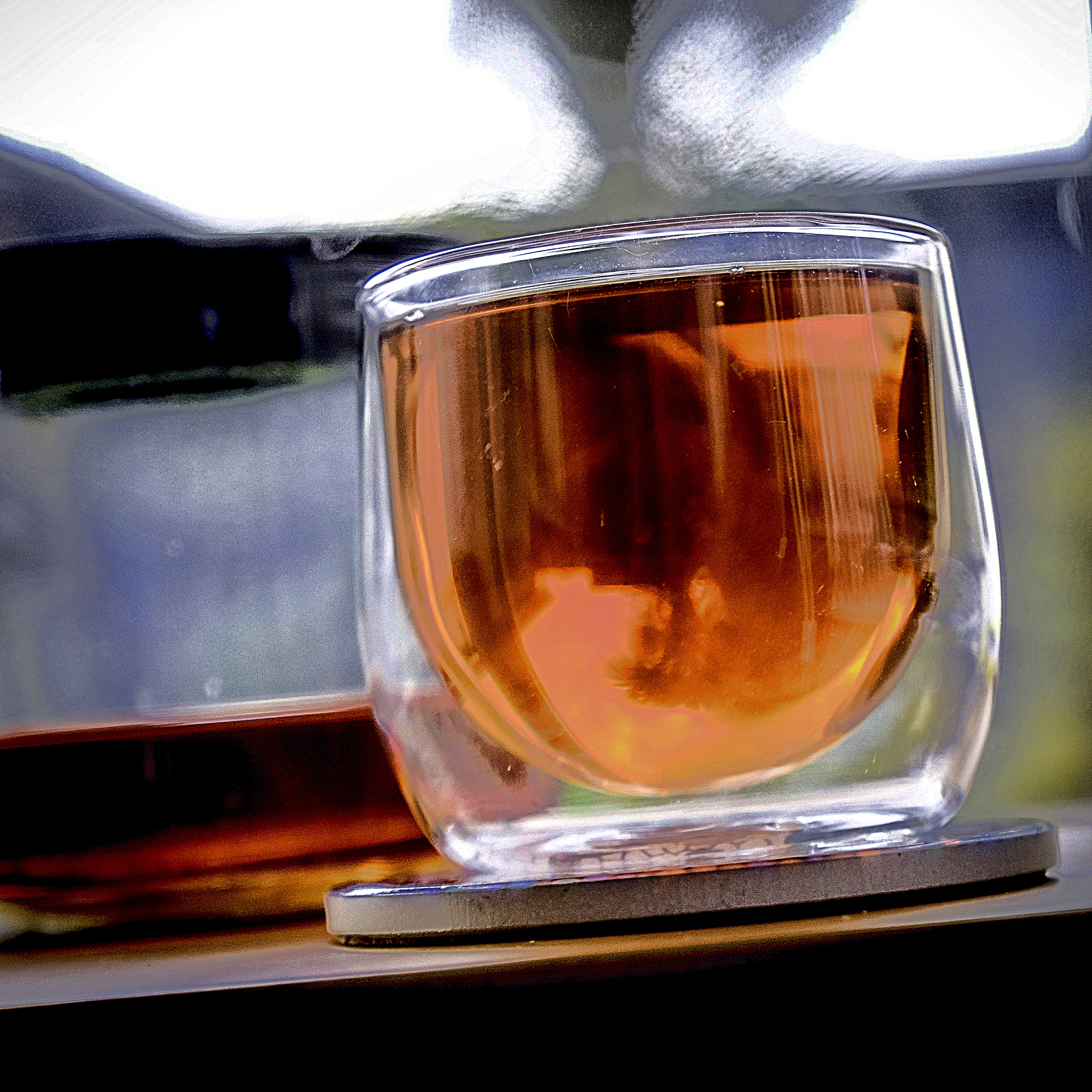
One of the simple pleasures of life on a dull December afternoon, with the bad news of another impending lockdown, and Christmas restrictions – a nice cup of S.D.Bell’s ‘Natural Leaf Tea,’ freshly brewed; golden brown and full of flavour.
One of my favourite local tastes!
Fujifilm X-T4, F=38mm, f/2.8, @ 1/250th sec on ISO250
S.D Bell’s are Ireland’s oldest independent tea merchant and coffee roaster. Established in Belfast in 1887, the firm continues to supply the finest teas and coffees from around the world. You can order on-line from them. Just click: https://sdbellsteacoffee.com
The Martin Memorial Clock Tower – beloved monument or ‘a decrepit eyesore?’
Back in September, 2020, Janette and I did a drive around the Lecale District, an area of outstanding natural beauty, not too far from where we live in Co.Down. I did three blog posts about that area, and in the first of those pieces, https://bobmcevoy.co.uk/2020/09/01/the-lecale-district-1/ I mentioned Van Morrison’s song, “Coney Island.” (Is it really a song?), in which Mr Morrison, one of our native sons, mentions many of the local places of interest in this part of Northen Ireland. But one of the lines of the song intrigued me. For Mr Morrison writes of driving through Shrigley to take photographs before he travelled on down to Killyleagh.
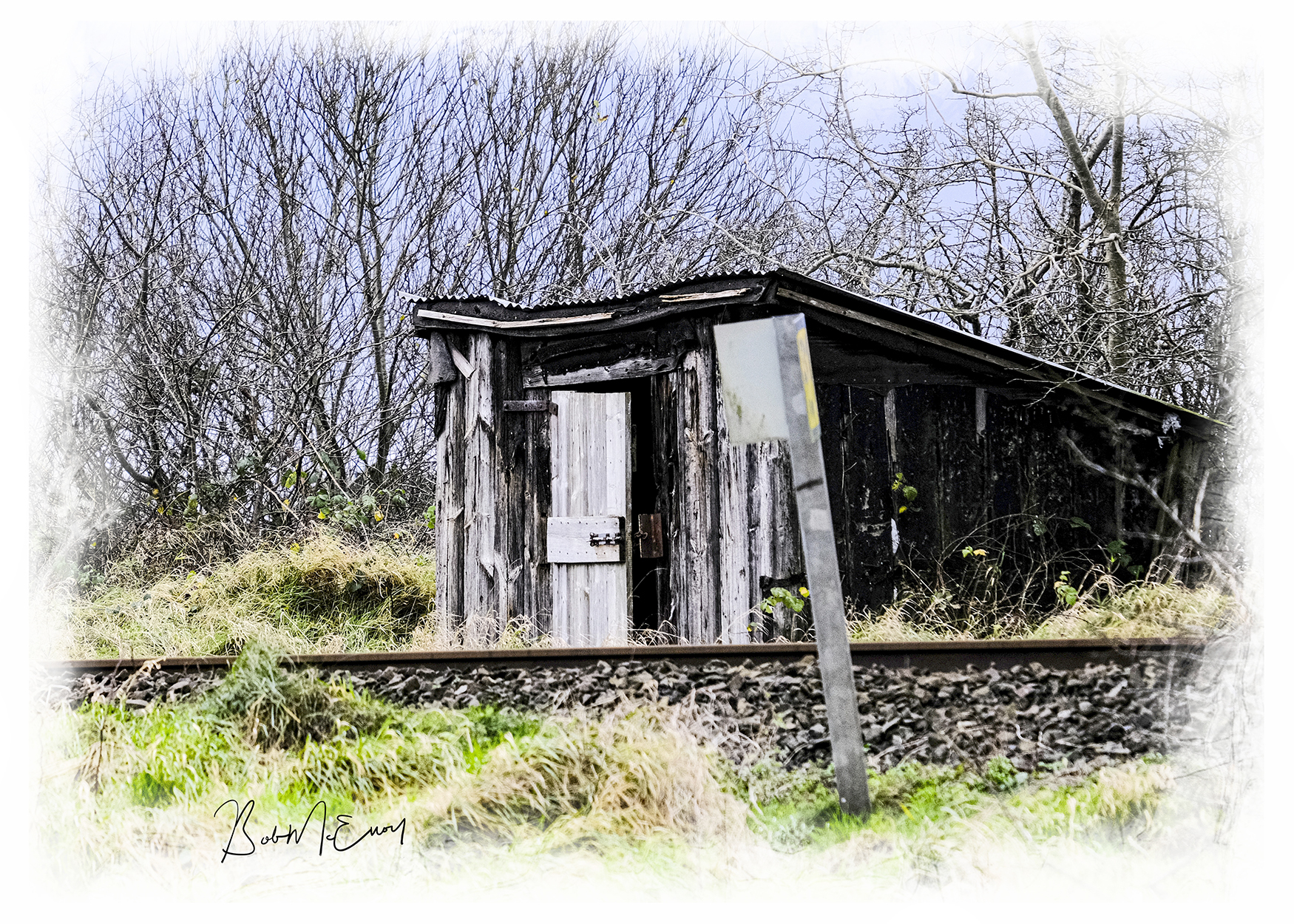
Around 2.30pm this afternoon, I was about to cross the Slaght Level Crossing, outside Ballymema, when this old trackside hut caught my eye, and I thought, “Ah ha! There’s an old trackside hut! Time to get the camera out.” I parked the car, and walked to a gate with a view of the track, and fitted a medium length zoom on the Fujifilm X-T4. (No, I wasn’t trespassing on the tracks.)
Fujifilm X-T4, F=200mm, f/4.8 @ 1/250th sec on ISO 1600.
I needed the faster shutter speed to steady the lens in the wind, – I should really have got the monopod out, lowered the shutter speed to 1/60th and the ISO to 400.
But then hindsight’s a wonderful thing!
Actually, a few days down the track (see what I did there) and I decided to take away that ugly sign in Photoshp. It probably improves the image significantly!
Shooting into the midday sun is never a great idea but the waves and the dark Mournes were irresistible today.
The image was captured today on Murlough Beach, a National Trust property, between Dundrum and Newcastle, Co.Down. The tallest peak is Slieve Donard, part of the Mourne Mountains range.
Shot on the Fujifilm X-T4, F=30mm f/20 @ 1/125th sec on ISO160.
Jennymount Mill is a relic of Belfast’s Industrial Past, situated beside the busy M2 Motorway in North Belfast. Needless to say, to attempt to photograph the Mill from the motorway angle would be both illegal, and dangerous, probably fatal. But when one is in the passenger seat of a passing vehicle, with a camera and a clean window, it’s probably ok to get a quick snap – but don’t distract the driver.
Between Dundrum and Newcastle, Co.Down is this ancient Dolmen, a strange stone structure that stands out against the skyline.
Slidderyford Dolmen
It is generally supposed that these stone structures mark burial grounds, probably from around 3000-4000 BC. Who built them, or how they were built is a mystery, it seems, but they occur all over Western Europe. Notice how the heaven top rock seems to fit into ‘sockets’ on the supporting rocks, and marvel at ancient engineering skills! To visit the Dolmen take the A2 road from Dundrum to Newcastle, and on reaching Murlough Nature Reserve turn onto Old Road, The Dolmen is on the left. Be aware though, that the tomb is sited on private land, which often is sowed out in crops, and to cross over to the monument would be trespass. It’s wise to take a medium range zoom lens if you want to photograph the Dolmen, and work from the road verge.
I visited the Dolmen on a bright afternoon, so conditions for photography were not optimal. I had to overexpose by around 2 stops to bring out some detail in the stones, which left the sky overexposed. I’d no tripod with me, so no opportunity for a series of shots for HDR processing.
The images above was made with the Fujifilm X-T2, F=180mm, f/8 @ 1/250th sec on ISO250.
Between Carryduff and Lisburn, with views across Belfast and the Lagan Valley lies the hamlet of Drumbo, with its historic Round Tower, now situated the graveyard of the Drumbo Presbyterian Church.
The tower is one of the oldest monastic monuments in Ireland, dating from around the early medieval period. It was around in AD1130 when records show that it was plundered by one Connor McLochlin.