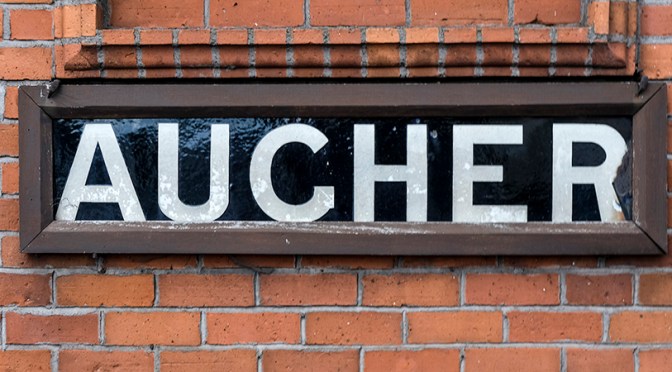
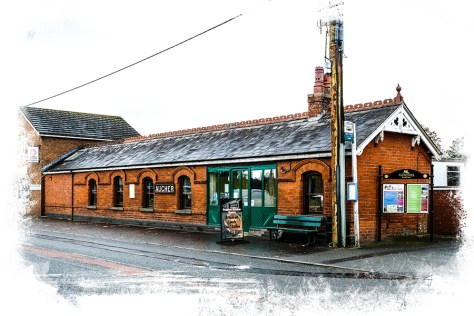
Augher is a village on the road from Ballygawley to Fivemiletown, in Co.Tyrone. I’ve paseed through it on many, many ocassions, but with a little bit of spare time after an appointment at Clougher today, I paused in the village to explore. The main focus of my interest was the old Railway Station, once part of the Clogher Valley Railway. The 3ft narroe gauge railway operated between 1887 and 1942, linking the GNR mainline stations at Tynan and Maguiresbridge. It passed through Caledon, Aughnacloy, Augher, Clougher, Fivemiletown (where the trains ran along Main Street like a tram) Colebrooke, Brookeborough and Maguiresbridge. The old train station at Augher is still extant, used now as a coffee shop.
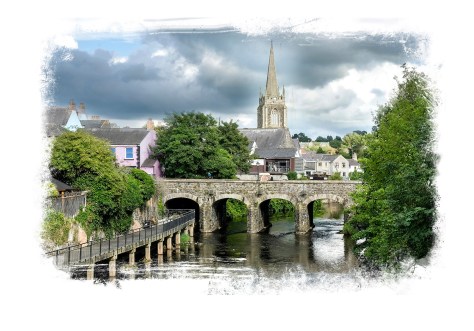
Antrim is the county town of its eponymous county. It’s Antrim, Antrim! So good they named it twice! 22 miles from Belfast, Antrim lies along the banks of the ‘Six Mile Water’ and on the shores of Lough Neagh, the largest freshwater lake in the British Isles.
The town’s history goes right back to just 30 years after the dewath of St Patrick, when, in 495, a Gaelic – speaking settlement of monks grew around the presnt site of the Antrim Round Tower. Continue reading Antrim, Antrim…→
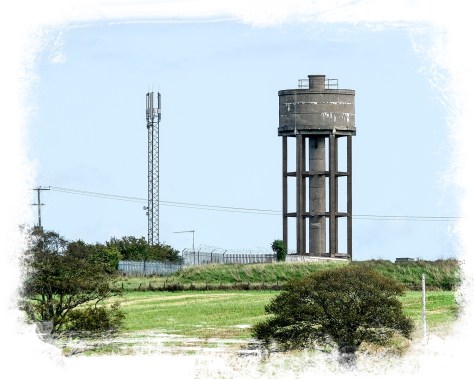
The old water Tower on Galloway Hill, close to Moneyreagh, Co. Down is listed on the community website, https://moneyreaghdistrictcommunityassociation.btck.co.uk/ as being one of the significant landmarks of the village! It is certainly visible for quite a distance around, but as a landmark it probably lacks a little in the beauty department. Still, I suppose its mostly only seen in the distance, as this photograph, taken from Tullyhubbert Road shows, and from a distance it doesnt look too bad.
Fujifilm X-D2 200mm lens, f/9 @ 1/250th sec on ISO200.
So, in the interests of bringing its lovely ‘landmarkedness’ to the wider public, I drove up Tower Lane to reach said monument to the human desire for thirst quenching wateriness, and record it from closer distances. Continue reading Moneyreagh Water Tower→
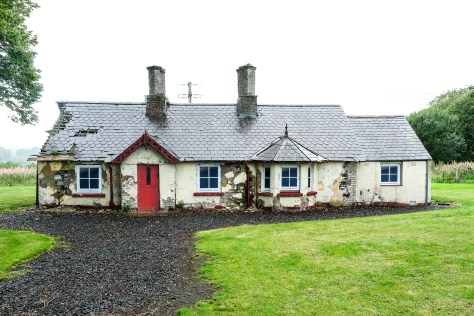
There’s a derelict house on Sourhill Road, Ballymena, which presents the passer-by with some interesting contradictions. The house is or rather was, a beautiful building, – almost an enigma, in its construction and decor, with beautiful colours, and fascinating roof patterns, and yet on even a casual inspection it is crumbling and decaying with broken slates and rotten timber. It is unoccupied and abandoned, but sits in well kept extensive grounds, with mown grass and a well kept gravel path. Its windows and doors have been removed and replaced with boards, but the boards have been painted to look like… windows and doors!
I’ve often driven along the M2 between Antrim and Templepatrick, and wondered about the little church, nestling up in the trees above the moterway. Today my curiosity got the better of me, and on the way home from a wedding I drove up to the church to get a closer look. It’s St John’s Church of Ireland, and it sits amidst a churchyard with some very ancient graves and tombs. Continue reading St John’s Church, Donegore→
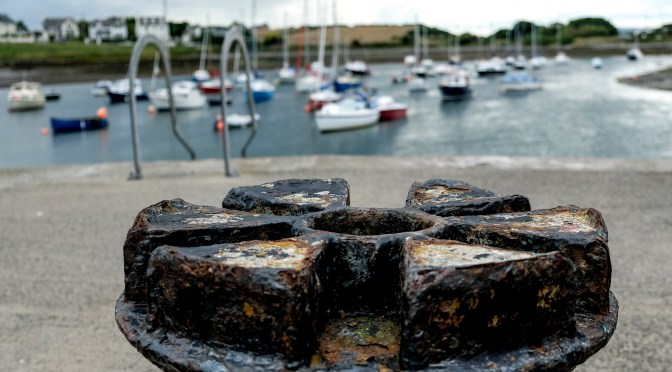
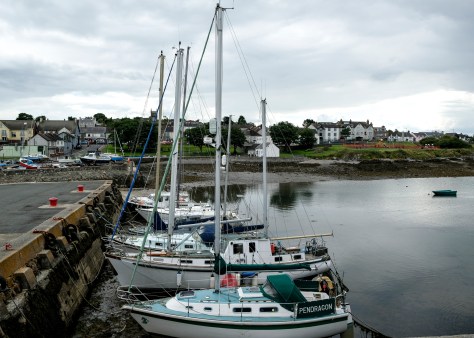
Groomsport, once a popular holiday destination, with acres of seaside caravans, lying on the North Down Coast just outside Bangor, and a great place for a quiet walk – with the Fujifilm X-T2 on an afternoon after an appointment nearby.
There’s a harbour, tidal though, so some of the vessels were no longer afloat when I arrived
The famous ‘Frosses Trees’ (original spelling ‘Frocess’) on the road between Ballymena and Ballymoney. The road runs through boggy ground,
Bogland near Glarryford, Co.Antrim
and the Pine trees were planted in 1840 on the instructions of Sir Charles Lanyon (architect and civil engineer) so that their roots would join under the road to provide support… Continue reading The Frocess→
Friday, 6th July 2018 – and a business trip to Coleraine became a good excuse for a walk around the town of Bushmills. Although I can’t quite put my finger in it, here’s something I really like about Bushmills.
Originally known as ‘The Olivet Home’ it was built to be an orphanage in 1886 by Alexander Orr Reid as a memorial to his only son who was killed in a shooting accident. It was purchased by Ballygowan Presbyterian Church in 1918 and used as a school and church hall. The inscription on the building is ‘The Time is Short’ – thought to be a reference to the death of one of the construction workers, who fell to his death from the roof. A white stone on the top of the tower marks the event.








 Portraits2Go.co.uk