I’ve often driven along the M2 between Antrim and Templepatrick, and wondered about the little church, nestling up in the trees above the moterway. Today my curiosity got the better of me, and on the way home from a wedding I drove up to the church to get a closer look. It’s St John’s Church of Ireland, and it sits amidst a churchyard with some very ancient graves and tombs. Continue reading St John’s Church, Donegore
Category Archives: Co. Antrim
Antrim Round Tower
This ancient monument is situated off Steeple Road in Antrim. It is one of the finest examples of an Irish Round Tower remaining.

The Frocess
The Frocess Trees
The famous ‘Frosses Trees’ (original spelling ‘Frocess’) on the road between Ballymena and Ballymoney. The road runs through boggy ground,

and the Pine trees were planted in 1840 on the instructions of Sir Charles Lanyon (architect and civil engineer) so that their roots would join under the road to provide support… Continue reading The Frocess
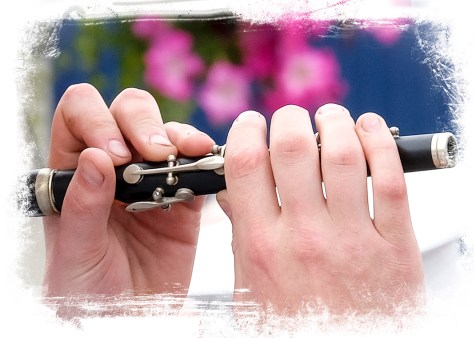
The Auld Orange Flute
Love it or hate it, the Twelth of July celebrations are a huge part of the culture in Northern Ireland, and by and large they are synonymous with marching bands. Flute Bands in particular!

Bushmills, Co.Antrim
Friday, 6th July 2018 – and a business trip to Coleraine became a good excuse for a walk around the town of Bushmills. Although I can’t quite put my finger in it, here’s something I really like about Bushmills.

Bushmills is, of course, famous for its Whisky, but the town has a lot of history forby. Continue reading Bushmills, Co.Antrim
Gracehill, Co.Antrim
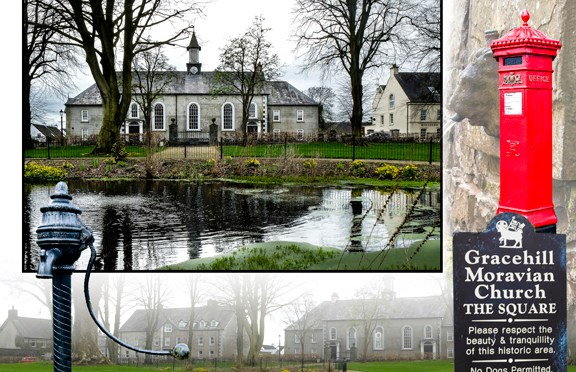
Gracehill Moravian Village.
On a wet Sunday afternoon, I spent an hour or so wandering about Gracehill. I’d driven through it many times, but never explored it on foot. The village is situated around two and a half miles from Ballymena, and was built in 1765 by Moravian Settlers.

Upper Ballinderry – Co.Antrim
Q. What does a photographer do on his day off?
A. Photography.
With no studio appointments on a Friday, and lured by the prospect of a decent spring day, and with another matter to be attended to in the area, I travelled to Ballinderry. It’s a rural area in Co Antrim, between Moira and Crumlin.
To be more precise, my real destination was Upper Ballinderry –
(There was a yarn – about a Ballinderry man who wanted to travel home from Japan, and who went to a travel agent in a small remote Japanese town, and asked for travel to Ballinderry. With oriental inscrutability and precision the clerk replied, Yes sir. Upper or Lower Ballinderry?)
He’d find it hard to travel to Ballinderry by train now as my first stop in the village proved. NIR has mothballed the line between Lisburn and Antrim and Ballinderry Station is now a shadow of its former self. The Antrim bound platform has been dismantled and the station building allowed to decay. The entrance to the station is now blocked. The track is still in place, – it was always a single track line, – but the passing loop has gone and the line seems to be used now as a siding. Today it had goods wagons sitting on the track.
Kellswater.
A visit to Kellswater in Co Antrim.

Kellswater Reformed Presbyterian Church, near Ballymena, Co.Antrim. Built in traditional ‘barn’ shape in 1806. The congregation dates to 1760 making it the first RP Congregation in Ireland, and still singing only the Scottish Metrical Psalms in worship.
St Patrick’s Church
Photo-Essay: Dunluce Castle.
Dunluce Castle, 2nd November 2016.
A visit to Dunluce Castle, between Portrush and Portballintrae on a cold, windy day in November, yet still plenty of foreign tourists around the ancient monument. The castle was built in the early 17th Century, by Randall McDonnell, and the now derelict mansion house sits out on a rock, reached only by a wooden bridge.

The approach to the castle is by way of a walled ‘funnel’ – to make it virtually unassailable. Visitors would have to be processed through the funnel, and any attack would be almost impossible.