Image made with a Nikon FG20 using Ilford Delta 3200, pulled to ISO1600. f=34mm, f/16 @ 1/500th sec.
A good film choice for a wintery day, although this image was made during weak sunshine.
This is a fast (by film standards) film, which accounts for its grainy appearance. In the developing tank, I split the processing time between 1600ISO and 3200ISO, giving it 10 mins 30 secs in Fotospeed FD10, mixed at 1/9 at 20deg, then 1 minute stop bath in 20 deg. water, 2 mins in hypo-clear and 10 mins wash.
It’s the first time I’ve used this film, and I must admit I expected more contrast in the scanned image, but, there’s another film loaded, and I’ll try again.
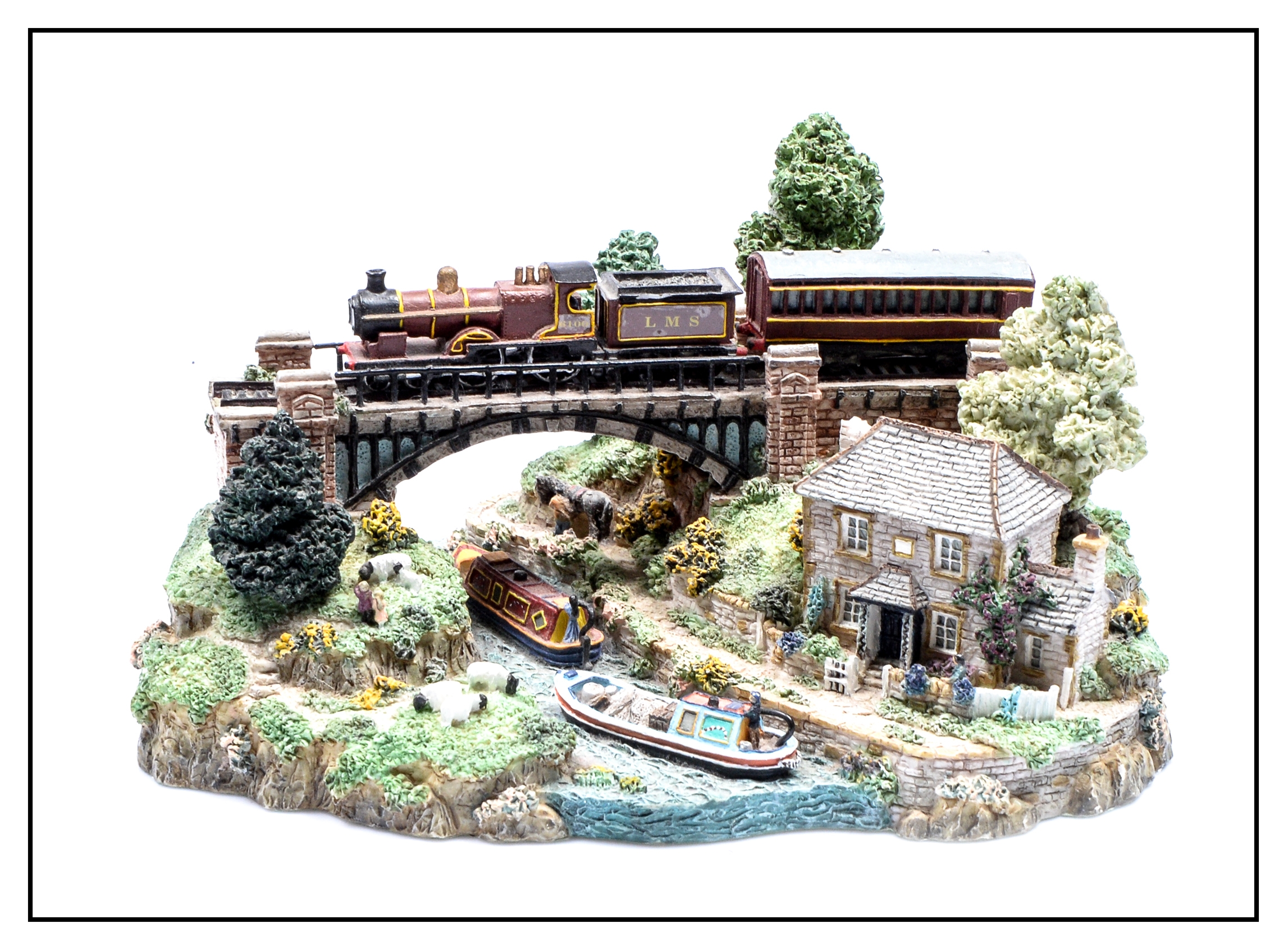
The River Crossing’ – a sculpture by Jane Hart, manufactured as part of a set by Danbury Mint in the 1990’s.
Photo made under studio flash, – two reflector umbrellas, placed directly above the item. Camera was a Nikon Df, with a Tampon 28-70mm f/2.8 portrait lens. Because this lens has a shallow depth of field, (it’s designed to be a portrait lens). I selected a tiny aperture, just f/22 with a focal length of 70mm, to produce sharpness throughout the image. For reciprocity, that required an ISO of 1600.
The shutter speed under studio flash is of little importance, for the flash duration more or less determines the exposure time,
(…so long as it’s under 1/250th sec – or the shutter will be faster than the flash and will obscure part of the image, and to slow a shutter speed will admit ambient light, which can be useful when using flash outdoors, or for fill-in, but not usually in studio, where the flash would usually be the only source of light).
We have recently moved house. In our last home the water was full of impurities, and film developing was impossible. Negatives were destroyed with multiple little white flecks. Eventually I just gave up.
On Saturday I thought, to while away an hour or two, I’d look through my old darkroom kit and see what was still usable. I found an unopened bottle of Fotospeed developer, (use by 11/2011). It was the colour of black ink, so it was disposed of.
On Thursday evening, 27th July 2022, Janette and me went down to the West Strand at Portrush to watch the sunset – how romantic is that! But we shared the experience with the Fujifilm X-T4 Camera, and about 100 other people who were gathered there! Here’s what the camera saw…
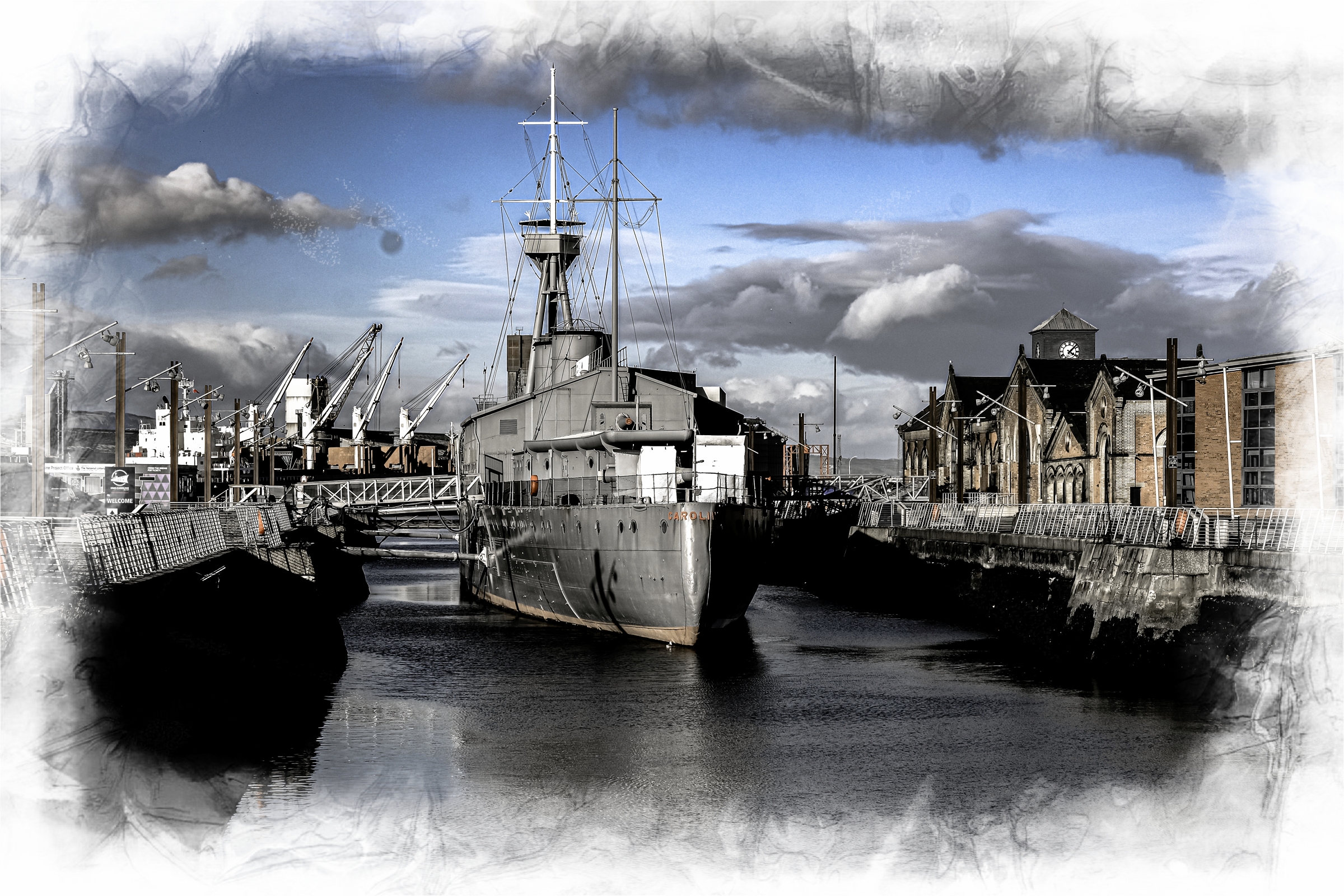
A wee dander with Janette and young Jude, around the Titanic Quarter in Belfast on a beautiful afternoon, on Thursday 21st October. I also had with me the Fujifilm X-t4! Permanently moored in the dock there is the old HMS Caroline. This iconic ship has been docked here for 90 years now, used as the training centre for the RNVR.
This week in Northern Ireland saw yet another political agenda being promoted and furthered by the skilful use of photography. To say that ‘the camera never lies‘ is no longer true in the age of digital manipulation, but was it ever? The simple shifting of the photographer’s position can change the perspective of the viewer, flatten distance, and be used to make a political point.
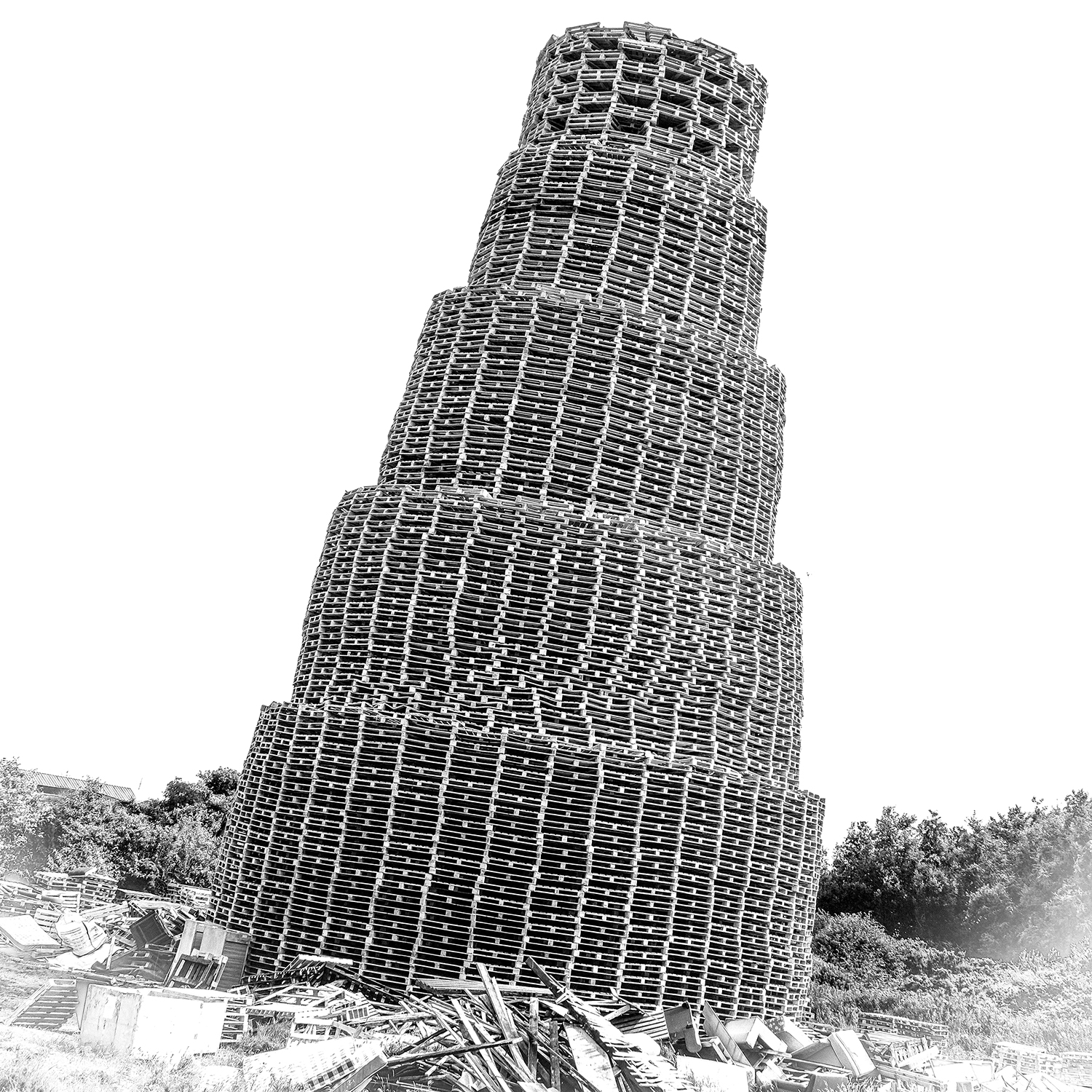
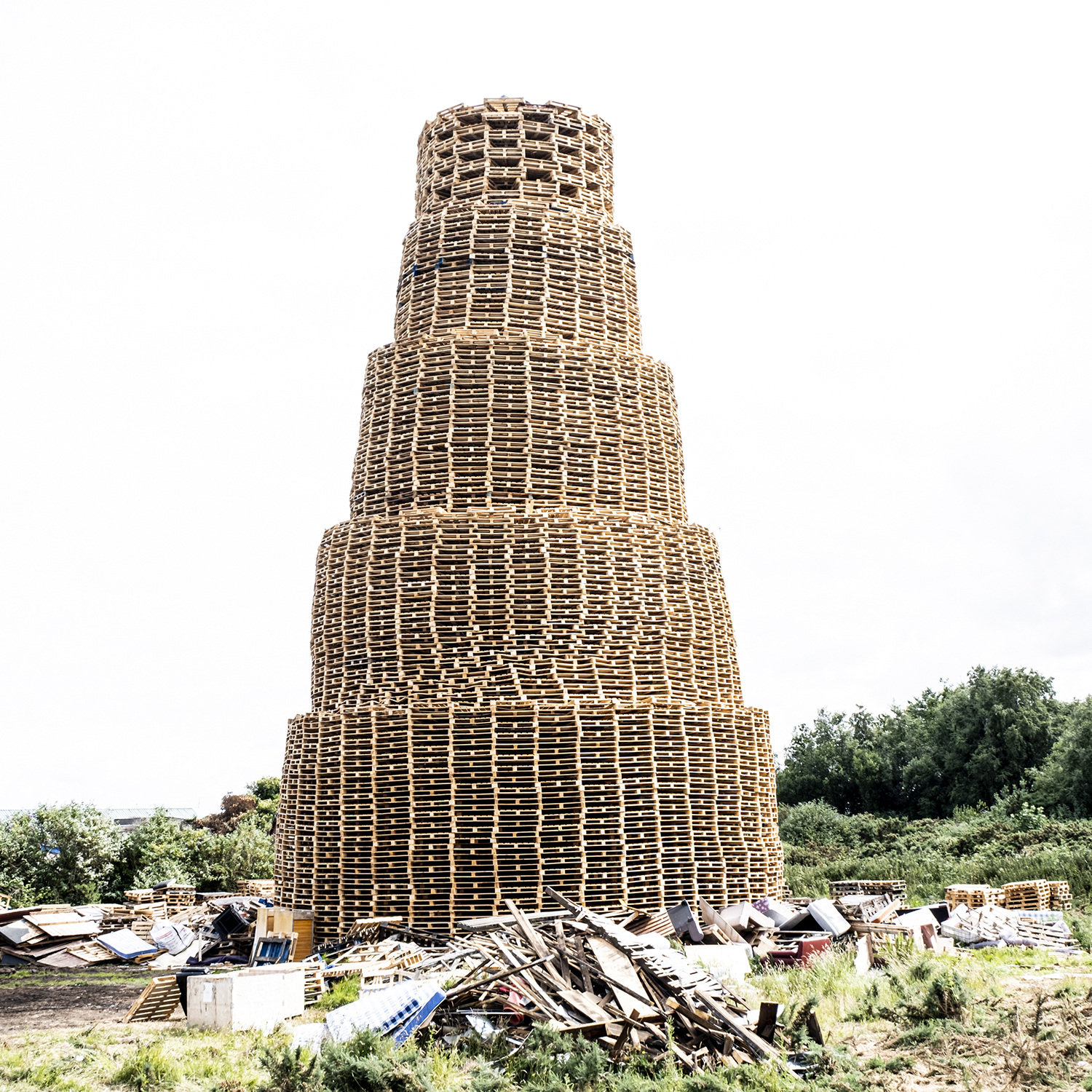
In Northern Ireland, the building of a bonfire, and the lighting of the fire on the 11th July is a tradition, long held among certain sections of the Unionist or Loyalist community. It is an expression of loyalist culture. When I was a boy, back the 60s and 70s, little bonfires were made in each street, no more than little piles of planks and scrap. But the local authorities tried to regulate the tradition. The street bonfires left a mess that needed to be cleaned up, and sometimes caused damage to properties. Often the materials that were burned were far from helpful in controlling pollution; tyres were often burned, pouring out toxic smoke into the air. To solve these problems, some councils began to offer grants to buy pallets, which would burn more cleanly, on condition that the street bonfires were replaced with centralised pyres, and pollutants excluded. This led to pyres like this one in Newtownards:
Fujifilm X-T4, F=25mm, f/14 @ 1/125th Sec on ISO250
It was this massive bonfire that became the subject of a media scam, fuelled by deceptive photography. Apparently this bonfire in Newtownards was built RIGHT BESIDE THE LOCAL FIRE STATION! An image was produced to prove the point, The media picked up on the story immediately, – radio programmes, a Twitter storm, newspaper articles, with the collective might of the left lining up to demand that the bonfire be dismantled and removed.
On 9th July 2021 I reproduced the photograph which caused the ‘offence’ – an image showing the ‘alleged’ juxtaposition of the pyre and the fire station.
Fujifilm X-T4, F=33mm, f/13 @ 1/125th sec, on ISO250
It looks authentic. There’s no Photoshop manipulation, the image is ‘as shot.’ But what has happened is that camera position is flattening the distance between the bonfire and the Fire Station. It is deliberately deceptive, and it set the local news agenda for a whole morning, before some locals pointed out that the distance between the fire and the station is considerable, with a stretch of waste ground and a four lane road between! Still, the Left got a whole morning of free publicity and a chance to pour more odium on the working class loyalist community of the town.
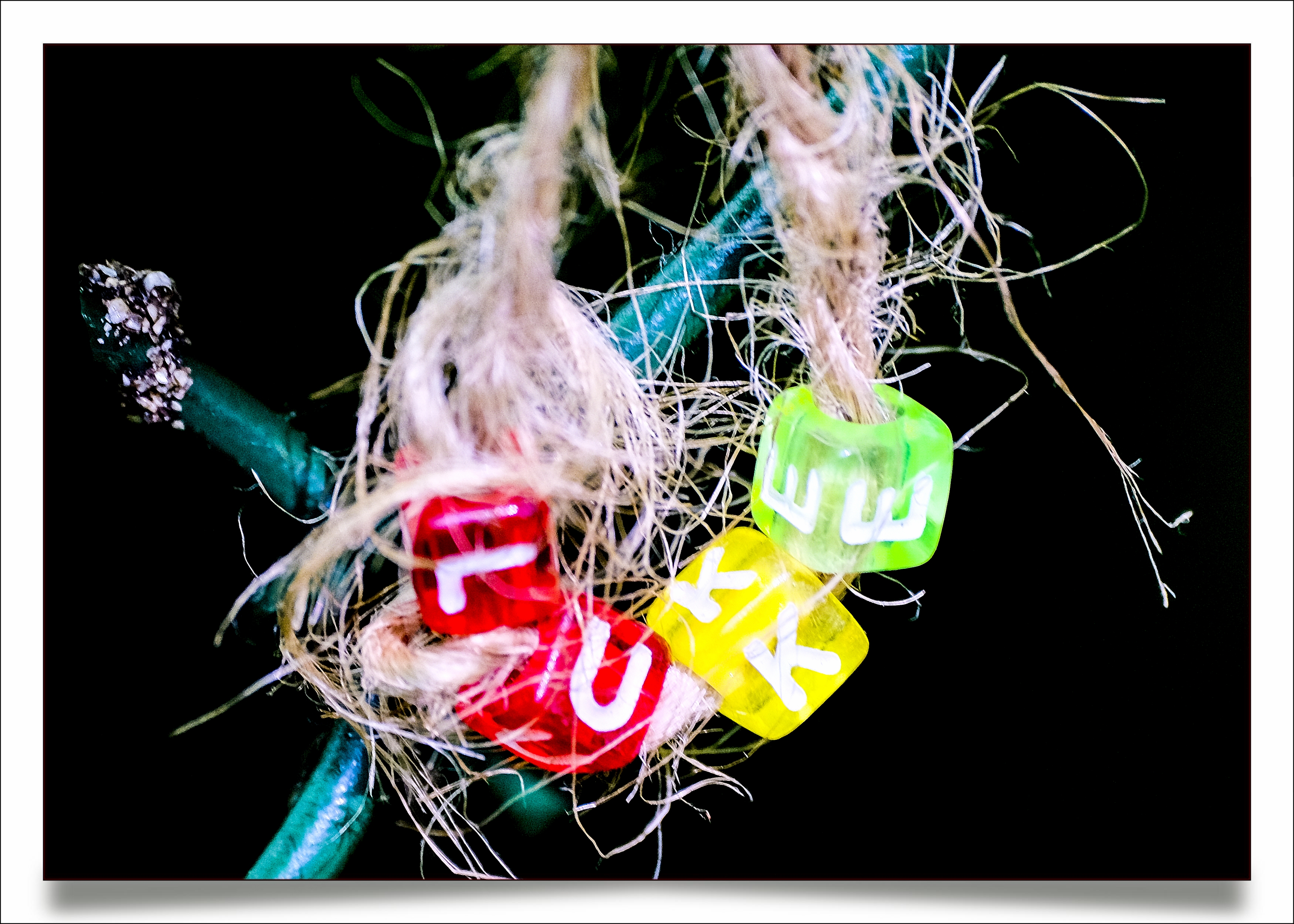
I’ve no idea who Luke is, but his name is on a string of beads, tiny little beads, at Kiltonga Wildlife Reserve near Newtownards. I photographed this with the new 70-300mm Fujifilm lens, with the lens extended to 300mm (420mm on full frame equivalent) and from a distance of just 3 feet. The lens, technically is not a macro lens, but its close focussing is pretty impressive.
Fujifilm X-T4 F=300mm, f/5.6, at 1/60th sec on ISO100, Provia film simulation.
There’s no doubt that an image like this will never be considered ‘beauutiful.’ It’s the inside of the cab of a huge mechanical shovel, the end used in quarries to lift tons of stone and gravel and load it into lorries.
I made the image, along with others, interior and exterior, as part of a commission for a commercial client, so it won’t ever be hanging on anyone’s wall!
Yet beauty is in the eye of the beholder, and photography, unlike some other disciplines is entirely subjective. What one person thinks is attractive and beautiful, will be repulsive to another. When I’d finished the commission, and sent off the completed images, this one still stuck out as interesting, if not exactly pretty. I like the almost ‘three dimensional’ aspect of the image, created by the juxtaposition of the levers and the screen, leading the eye in a convergence toward the starter key. The depth of field that blurs the image of other vehicles outside helps to keep the eye from straying outside the cab.
The Fujifilm X-T4 – A Lot of Praise but One Big Niggle.
I’ve been shooting with Fujifilm X-Series cameras since 2017 when I bought my first Fujifilm X-T2. I was immediately smitten. I’d been a Nikon user all my photographic life, completely loyal to the products of the Japanese giant. I’d begun in the ‘80’s with the FM2, and progressed through the Nikon D2x to the D750. I thought it would ever be so. But when I made my first few images with the Fuji X-T2 I was quickly convinced. It was the photographic equivalent of a Damascus road conversion. Since then I’ve been shooting (professionally and for fun) with the X-T2, X-T30 and X-T3. Everyone of them has been great. But when the X-T2 began to wobble a bit, I decided it was time for a change. I kept the X-T3, sold the X-T2 and X-T30 and with the equity, invested in the new X-T4.
The Fujifilm X-T4, with leather half-case.
So, what’s special about the X-T4? It’s just a little chunkier than its predecessors, and I’ve encased mine in a leather half-case, more for appearance than practicality, but it’s still an easy camera to hold, much more ‘grippable’ than the X-T2, and that’s important when you are clamouring in and out of vehicles.









 Portraits2Go.co.uk